.jpeg)



While home-builders and urban planners strive to maintain greenery amidst rising populations, they often sacrifice green spaces for housing or roads. However, an aerial view of a city reveals abundant unused spaces on roofs. Blue-green roofs (BGR) offer a solution, transforming these unused spaces with self-sustaining plants, ensuring that we retain (at least some of) the rural within the urban. This greenification can support biodiversity, wildlife preservation, and provide restful recreational spaces .BGR can offer major help in the challenge against industrial greyness.
However, BGR adoption is slow. Despite benefits like floodwater management, biodiversity enhancement, and natural insulation, concerns over weight,cost, and maintenance deter many. This research fathomed solutions to make BGRs affordable, environmentally beneficial, and recreational for citizens to recover from daily city stresses. So what is still stopping us from reaching widespread adoption?
Goal: encourage discourse, speculate/suggest possible solutions for LILa green roofs
From Ideation to Conceptualisation
Stakeholder analysis:
.jpg)
Ideation
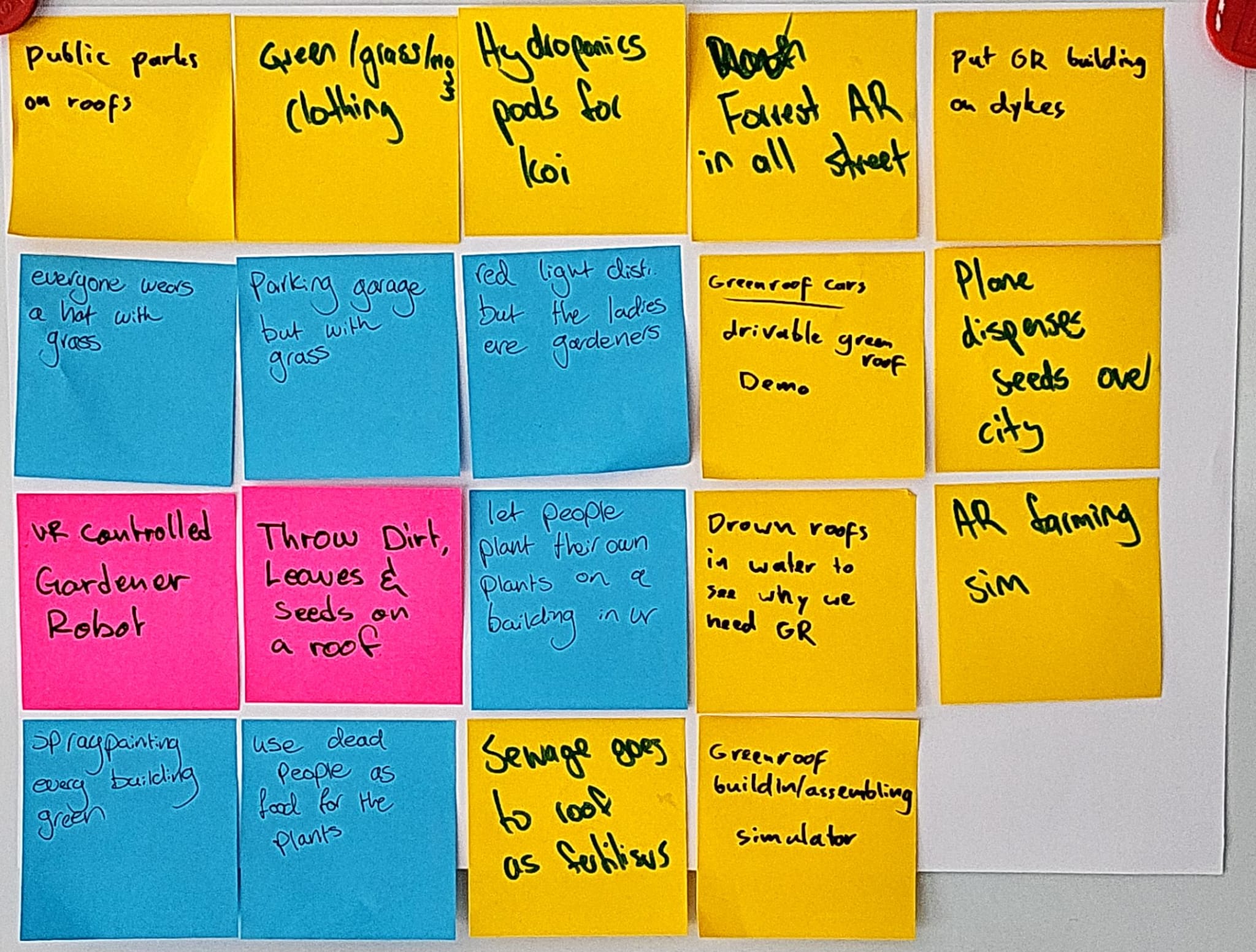
Reverse Thinking:
Braindrawing:
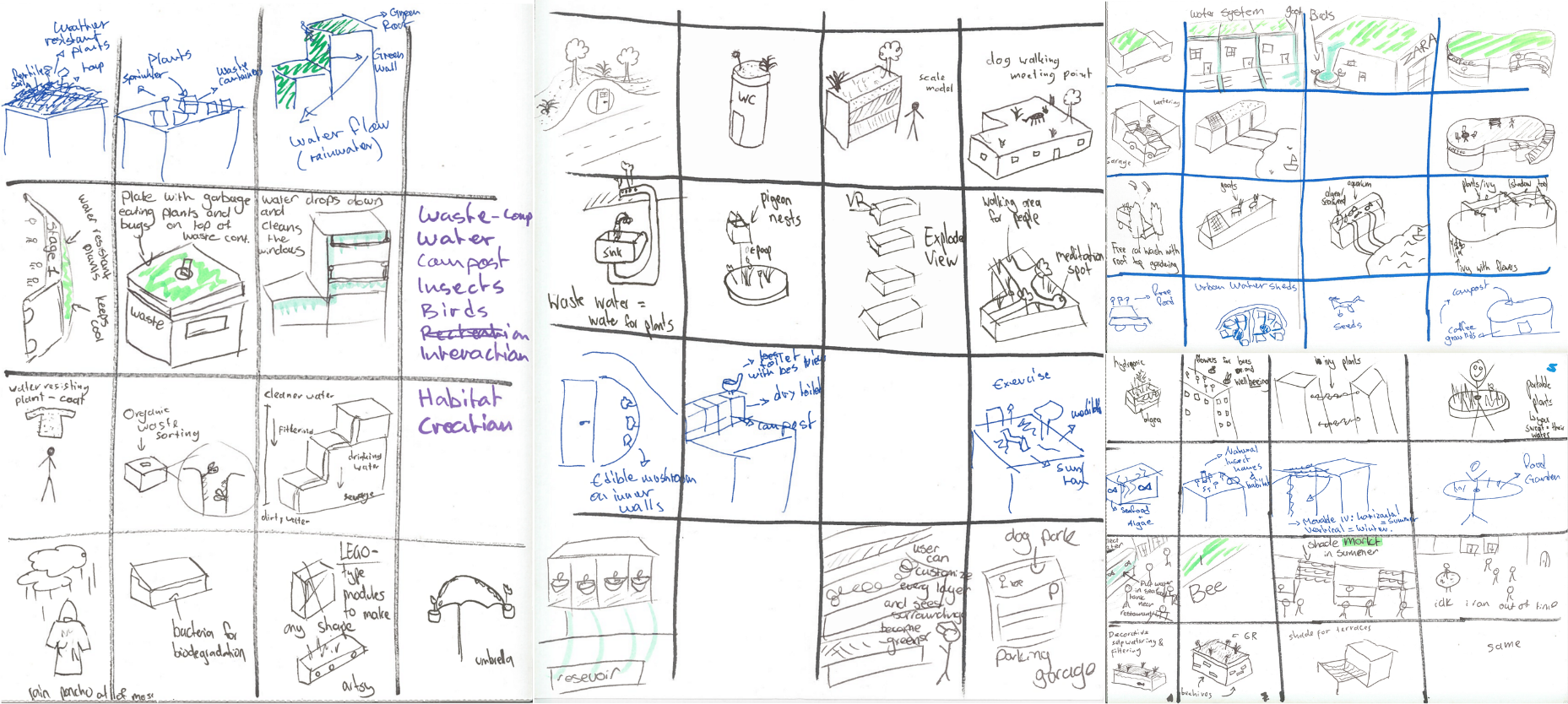
Thematic analysis:
A thematic analysis is conducted on the braindrawing outputs to cluster together recurring themes, and identify commonalities within the ideation output. The following thematic clusters were identified:
Conceptualisation
Sketches:
.png)

Preliminary (Summarised) List of Requirements:
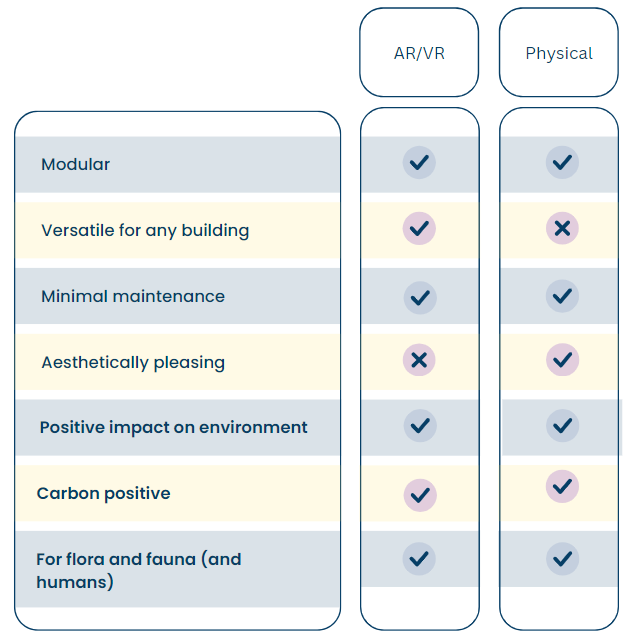
Application Scenario:
Citizen science approaches are paramount to this research. Since the current focus is to gain a deep insight into the public's perception on blue-green roofs, as well encourage discourse on the necessary compromise to be made between synergizing a space for both humans and wildlife, perspectives from the general public are required. Hence, DDW poses ideal in investigating the questions suggested previously with a wide array of stakeholders, to gain a better understanding of BGR perceptions, as well as to provide exposure for the public. To make an impact when it comes to the adoption of Green Roofs, these demonstrators help to encourage discourse between citizens to make them actively reflect upon the added value of implementing Green Roofs.
Modularity:
.jpeg)
Prototype:
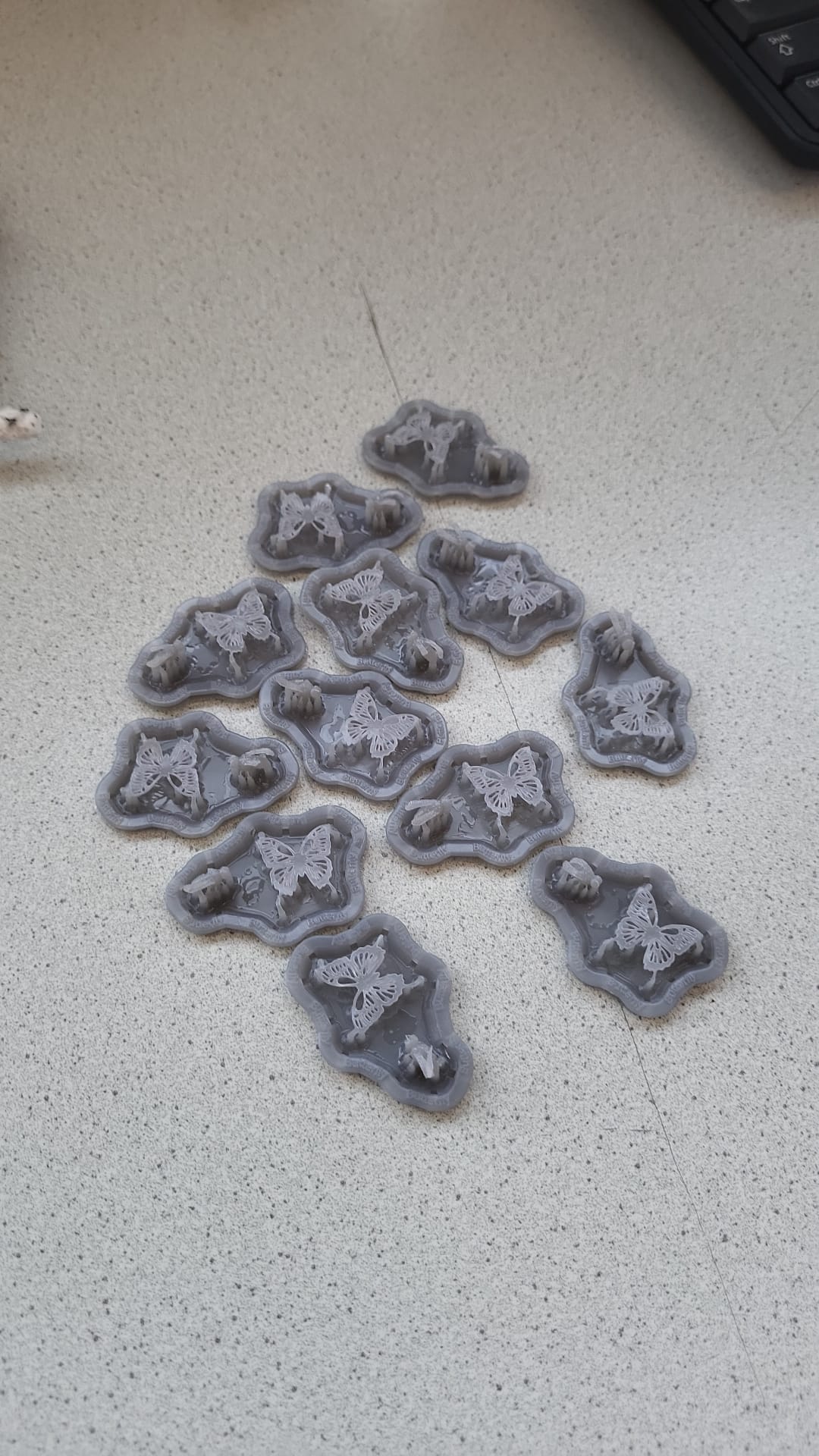
.jpeg)
.jpeg)
Link to the 4TU, Design United eMagazine article: https://www.4tu.nl/du/projects/green-roof/
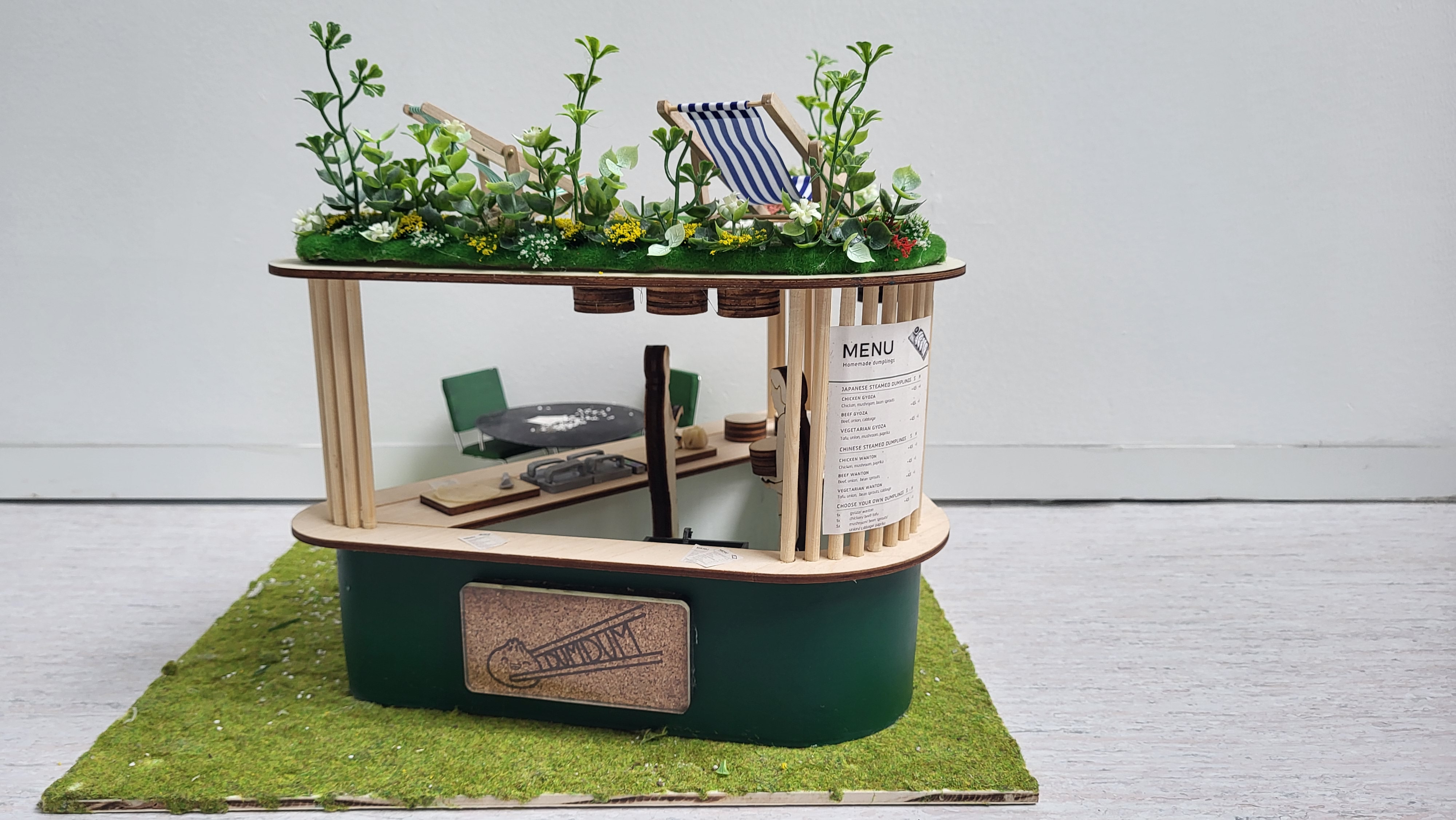
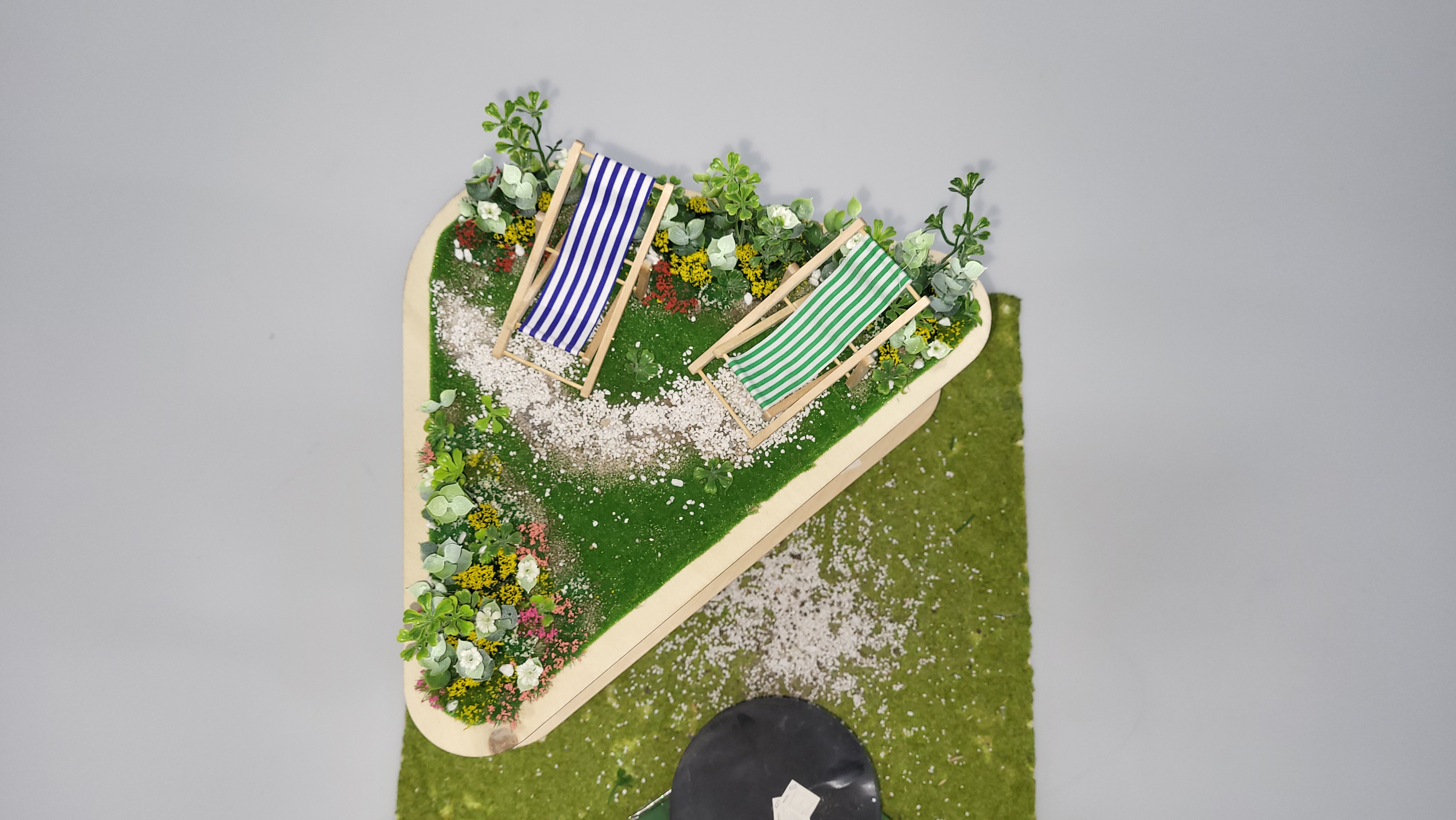
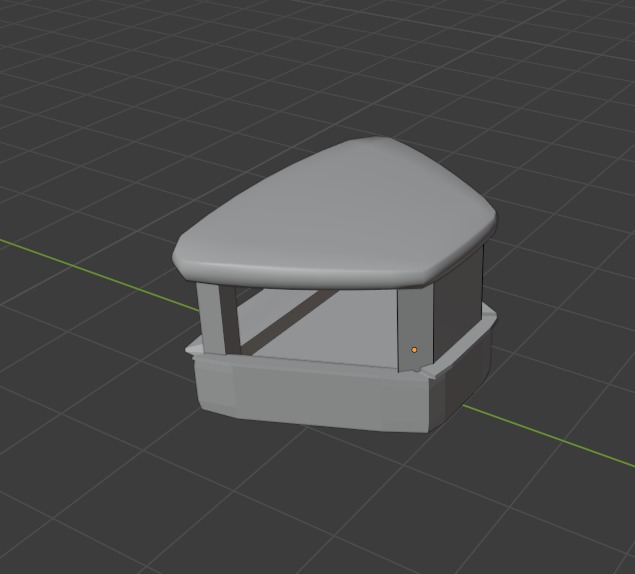
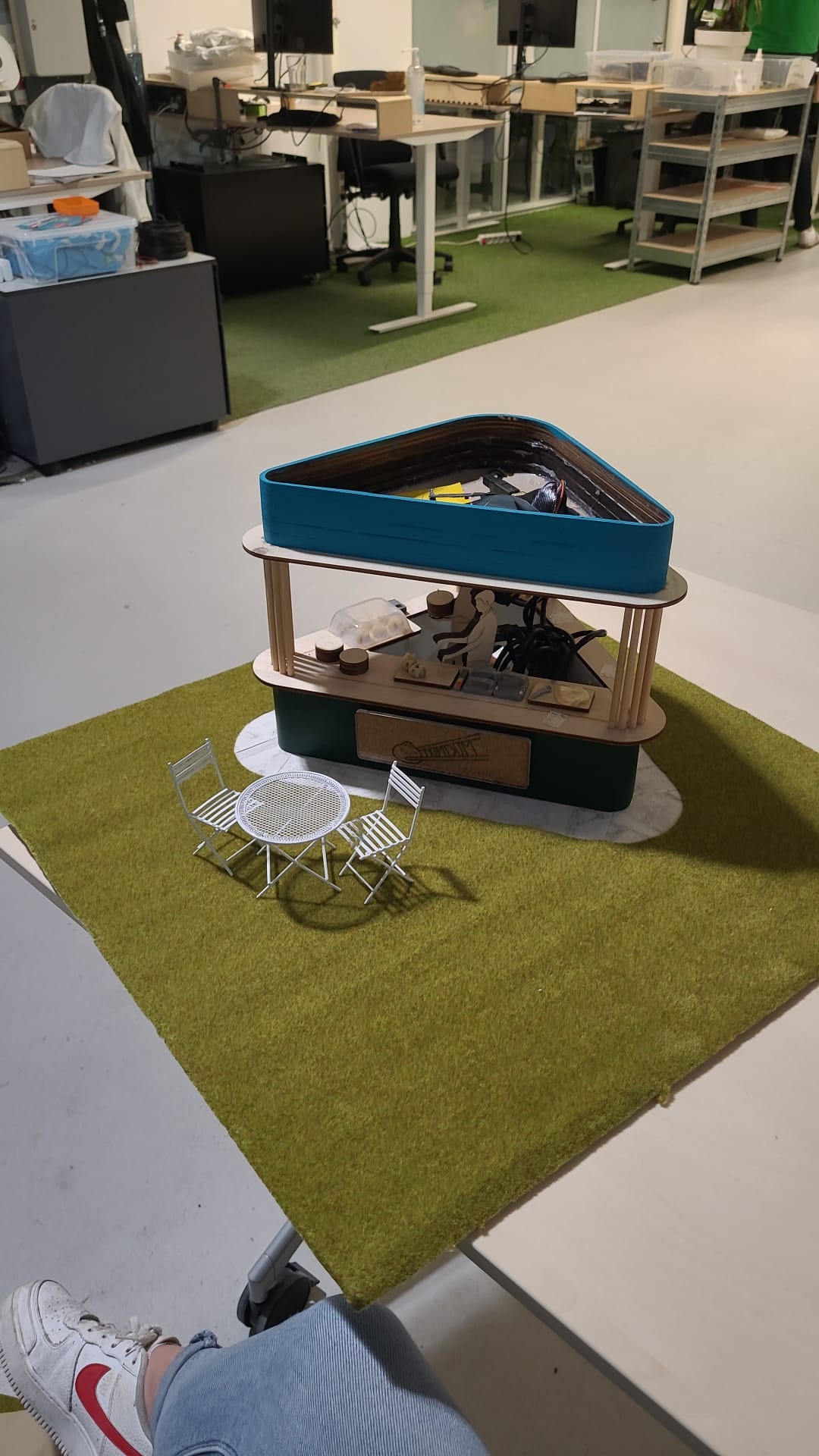
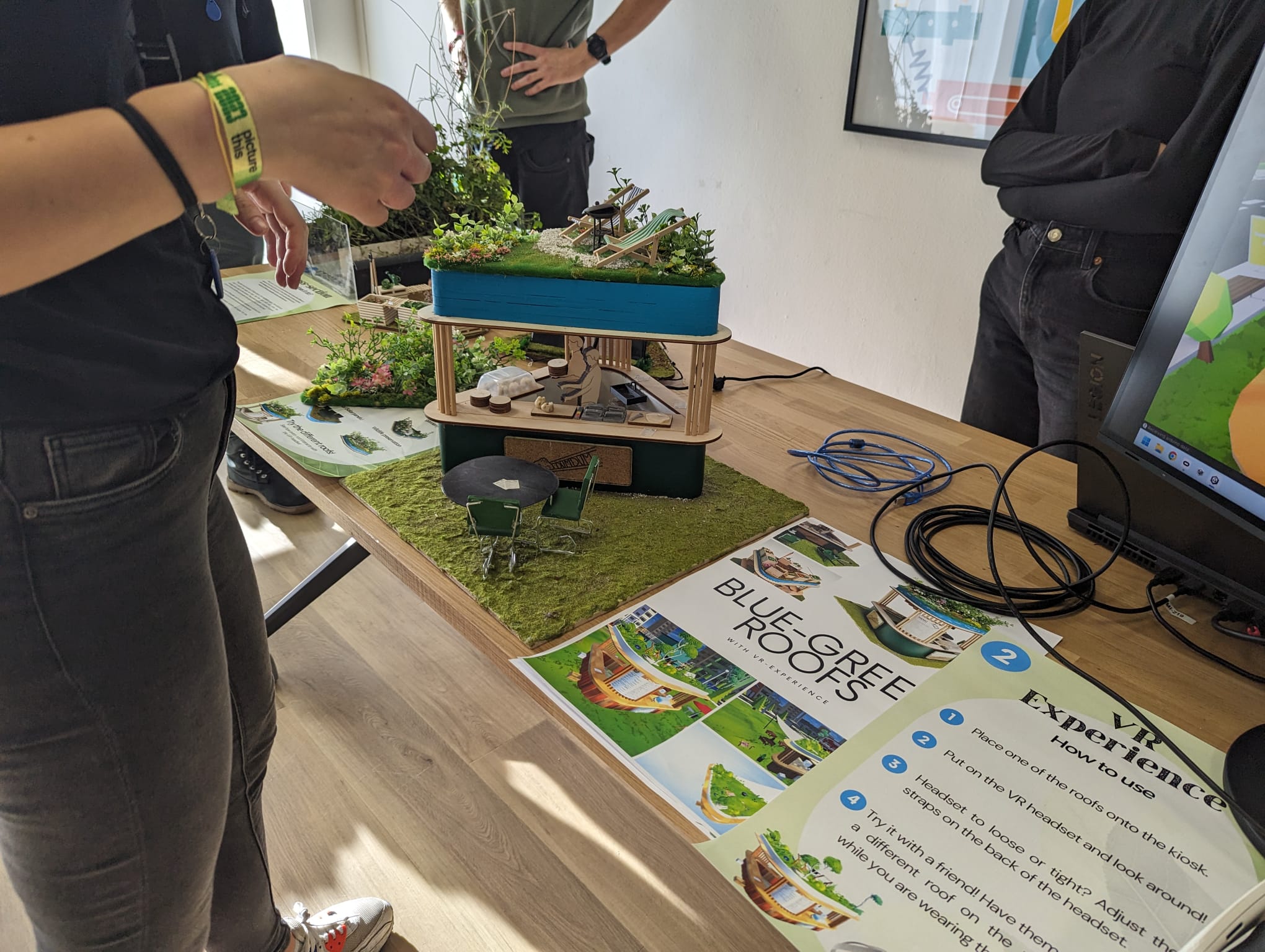
A set of demonstrators was developed which provoke interest and encourage public discourse on the topic. This entails a combination of virtual and physical elements. A replica model of a Green Roof in its use-case is showcased, as well as suggesting modularity solutions. The replica model is an dumpling kiosk with a triangular roof that has three possible roof options that can be placed on top.
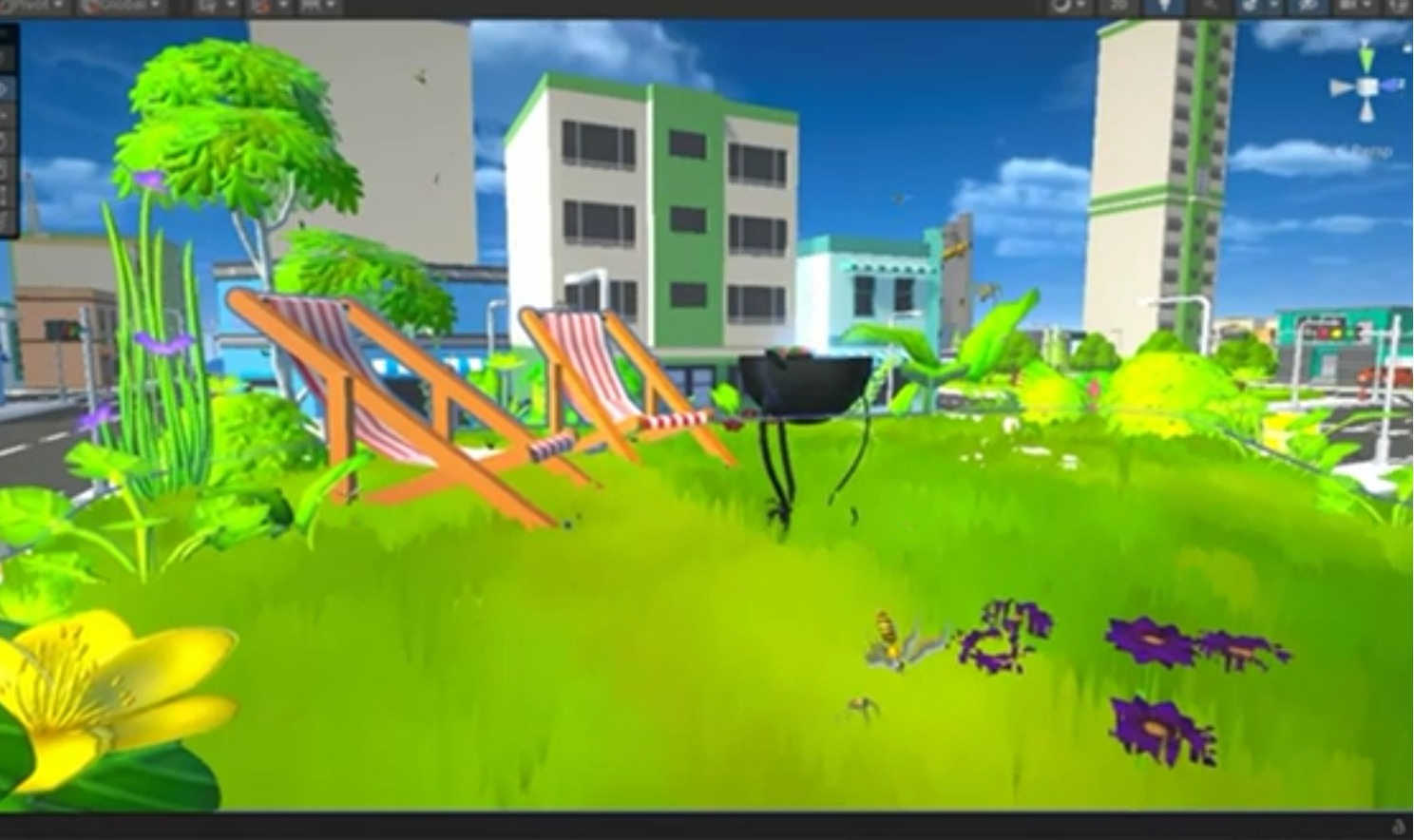
On top of this, a VR demonstrator was developed to immerse users in a realized Green Roofs that allow users to explore its impact on humans and nature.
As users change the roof of the physical prototype, the virtual twin is adjusted to mirror the same roof. This way, users can fully immerse themselves in the BG roof and reflect critically on its implications.
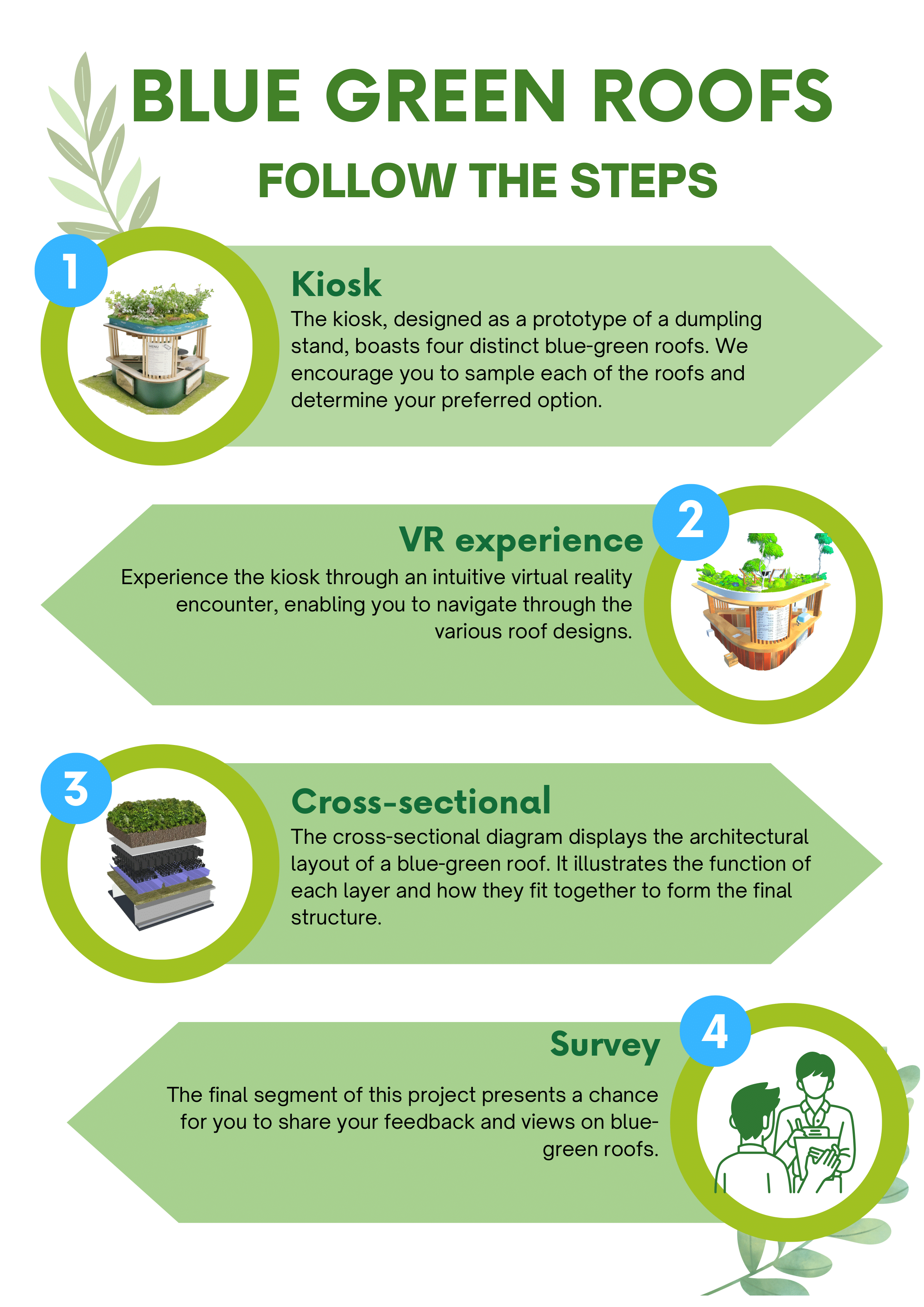
Cities are facing the challenges of becoming more grey and overcrowded. Home-builders and urban planners are trying to accommodate a rising population through the building of houses and roads, but often at the expense of green spaces. At a closer look, cities still have unused roof space. Blue-green roofs (BGR) could transform these spaces, using self-sustaining plants to retain some of the rural within the urban. This research aimed at making BGRs affordable, environmentally beneficial, and recreational for citizens, through understanding the public's perception of green infrastructure. This was achieved through the creation of a demonstrator product that provides interactive experiences, in VR and through a tangible prototype, to users concerning the adoption of Green Roofs.
.jpeg)
.jpeg)
.jpeg)
.jpeg)
.jpeg)
.jpeg)
.jpeg)