


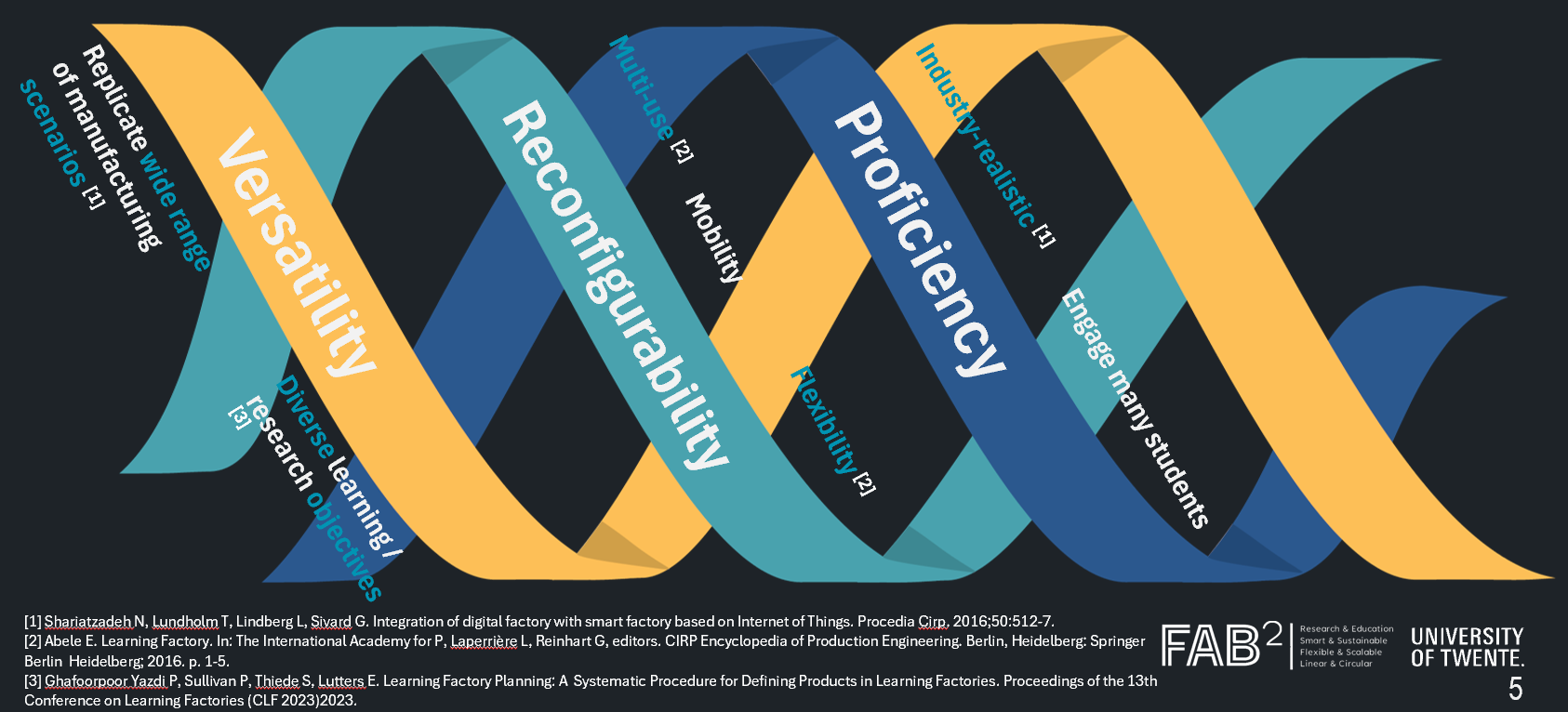
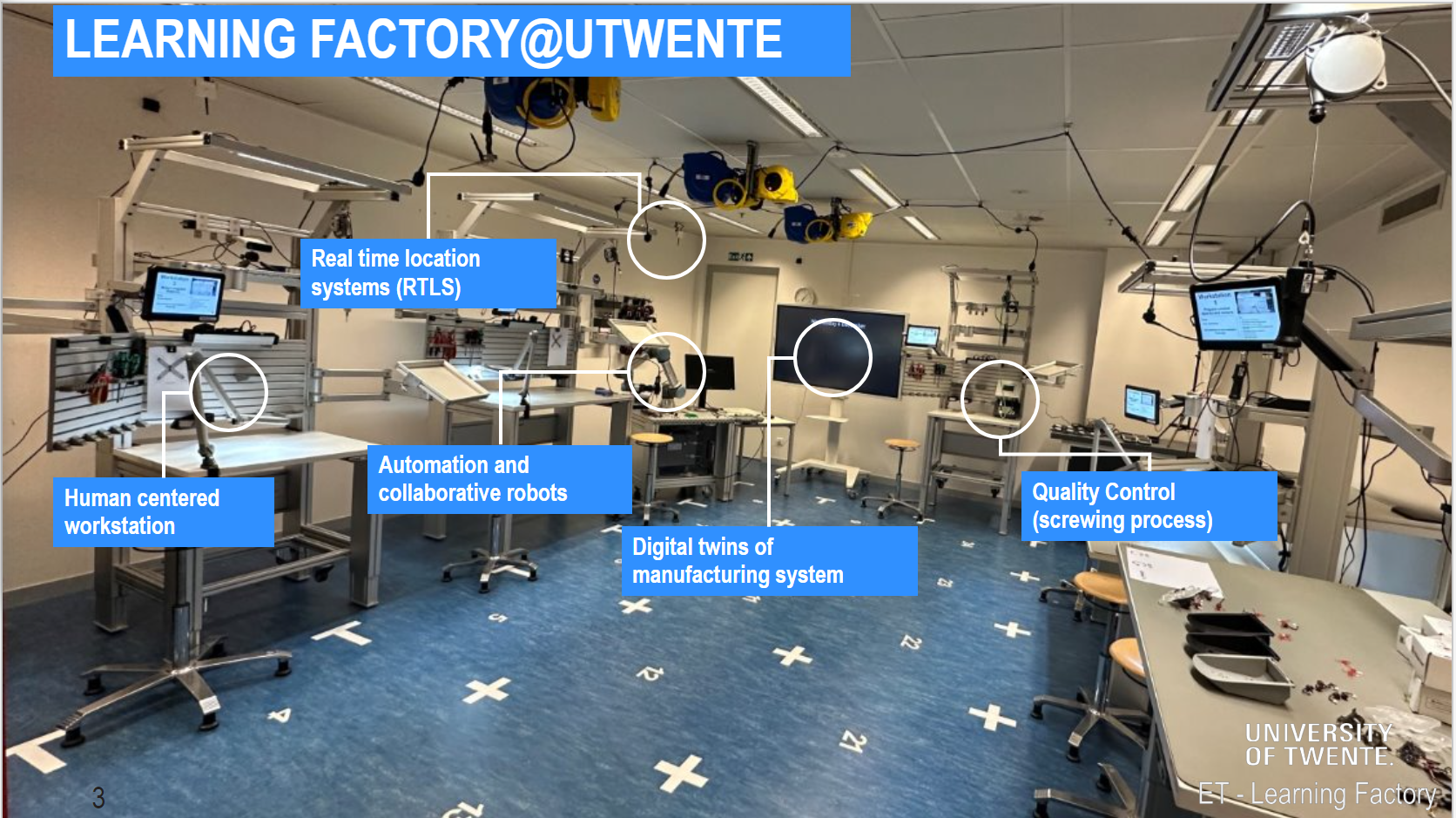
Manufacturing engineering education often lacks practical roots in managing production systems. To enrich learners' backgrounds and expedite knowledge transfer, Learning Factories (LFs) are introduced in universities to provide students/researchers industrial-related controlled environments [1]. These facilities foster teaching, training, andresearch activities in the realms of innovation and skills development [2].To accomplish this, the LF established at the University of Twente (UTwente) [3] demonstrates how to mirror the learning objectives inspired by the best practices identified in [2, 4]. Specifically, the triple-helix of versatility, reconfigurability, and proficiency represents its core objectives. Through these, LFs successfully shape the futureof production knowledge by exposing the next generation of engineers to learn-by-doing experiences over purely theoretical ones. To meet a vast variety of learning/researchobjectives in a versatile manner, the LF capabilities are set out to replicate a wide rangeof manufacturing scenarios and set-ups. Therefore, the integration of many diverselearning courses, paths and actions achieves a comprehensive manufacturing background for all stakeholders [3].
September 2021: Define strategic direction and initialise equipment procurement
June 2022: Setup state-of-the-art factory equipment
December 2022: Begin POC of facility by hosting first students
May 2023: Construct, develop and build digital twin of LF
June 2023: Expand team to 5
July 2023: Expand robotics and infrastructure capabilities, implement structured manufacturing scenario
September 2023: Facilitating numerous research projects, PhD work, thesis assignments, and hosting various workshops/courses on production engineering
November 2023: Official opening of the UT’s Learning Factory
December 2023: Successfully hosted over 500 students at the LF
January 2024: Expand team to around 10
April 2024: Hosts of the International Conference of Learning Factories
May 2024: Publication of CLF paper
December 2024: Expand LF facilities and integrate with other labs at the University of Twente
The core capabilities established for the Learning Factory were strategically chosen to align with the triple helix of versatility, reconfigurability, and proficiency, within the context of technological capabilities and knowledge transfer.
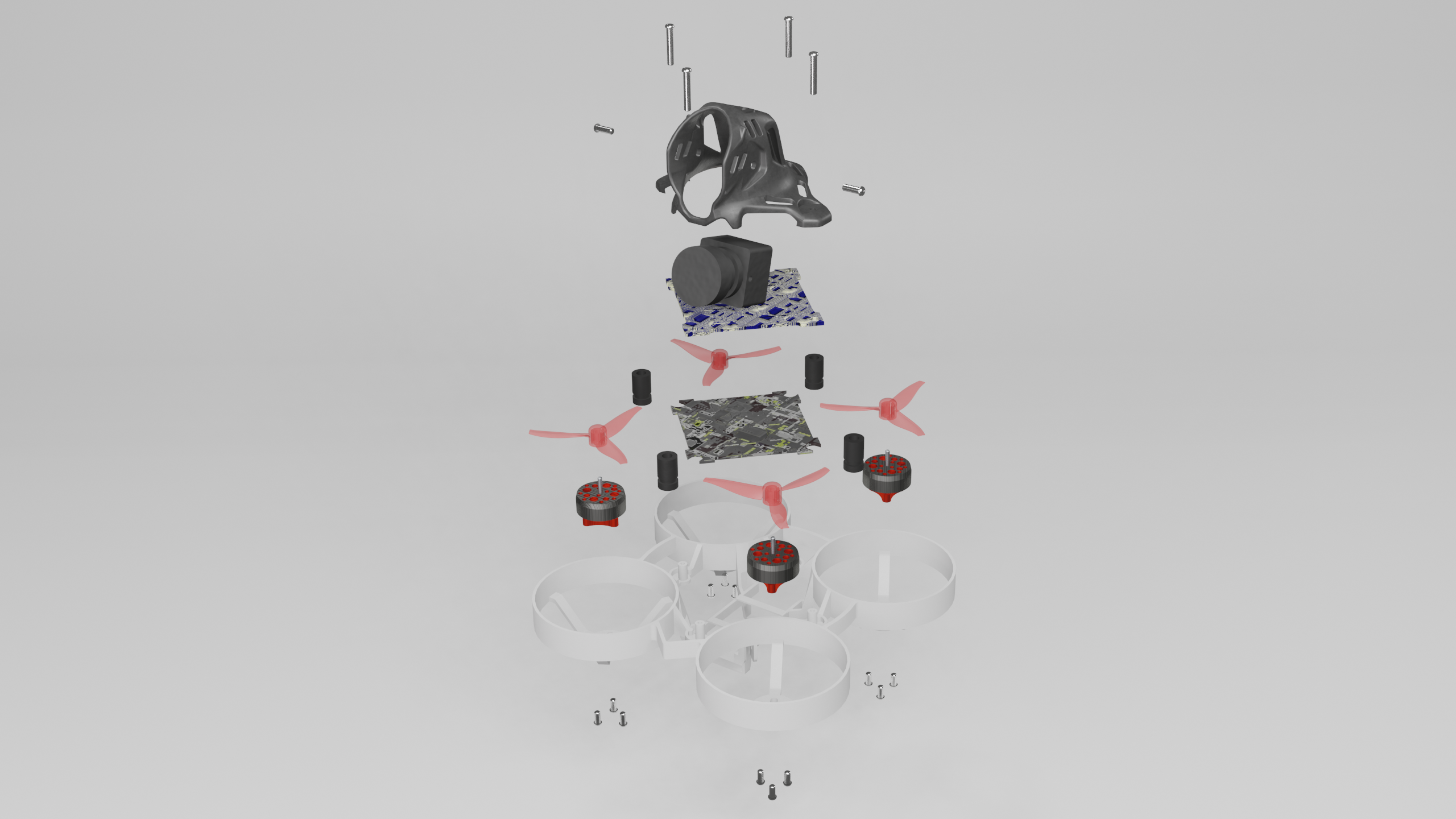
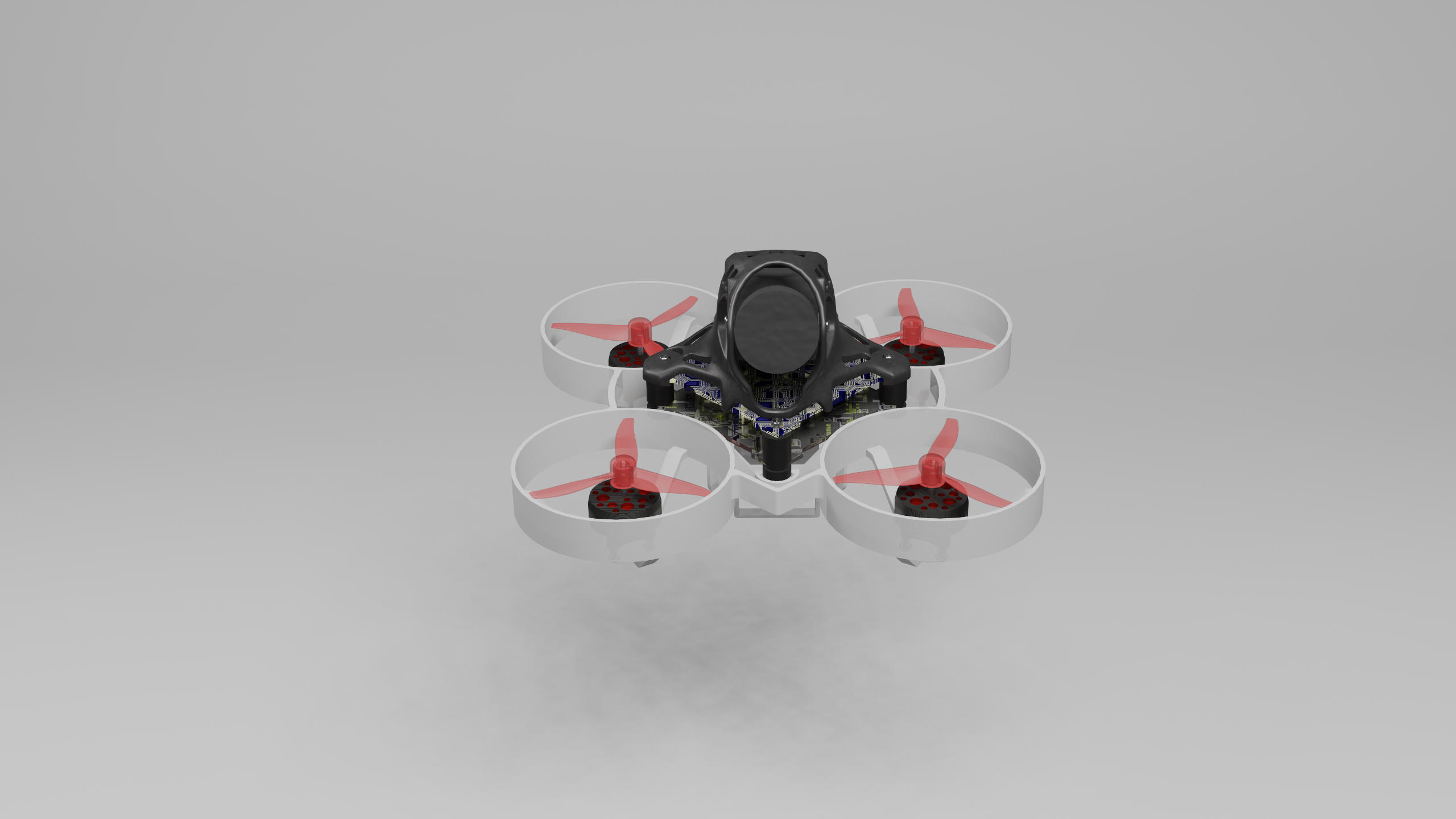
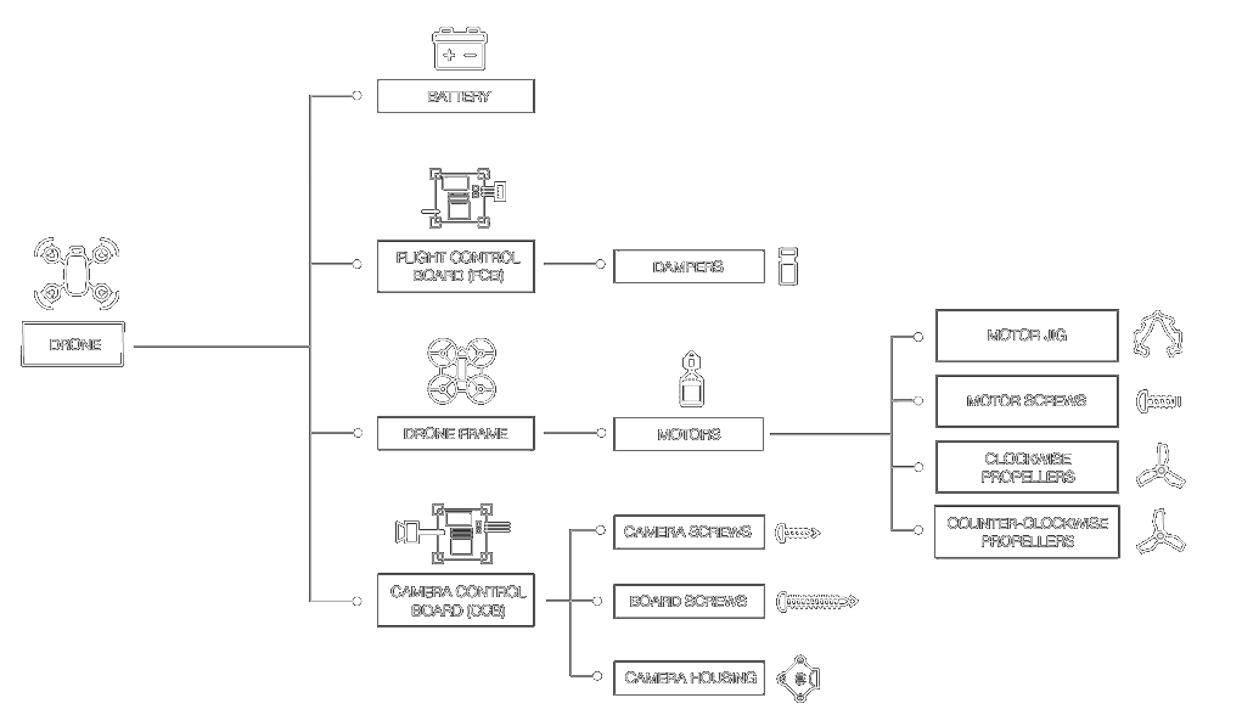
The LF’s dedicated product is a 1 inch tiny-whoop FPV drone. This product was chosen due to its intricate mechatronic assembly task, posing a learning curve of suitable steepness for students to engage with. A quick overview of the product architecture and a high-detail render I made of the CAD model are shown below.
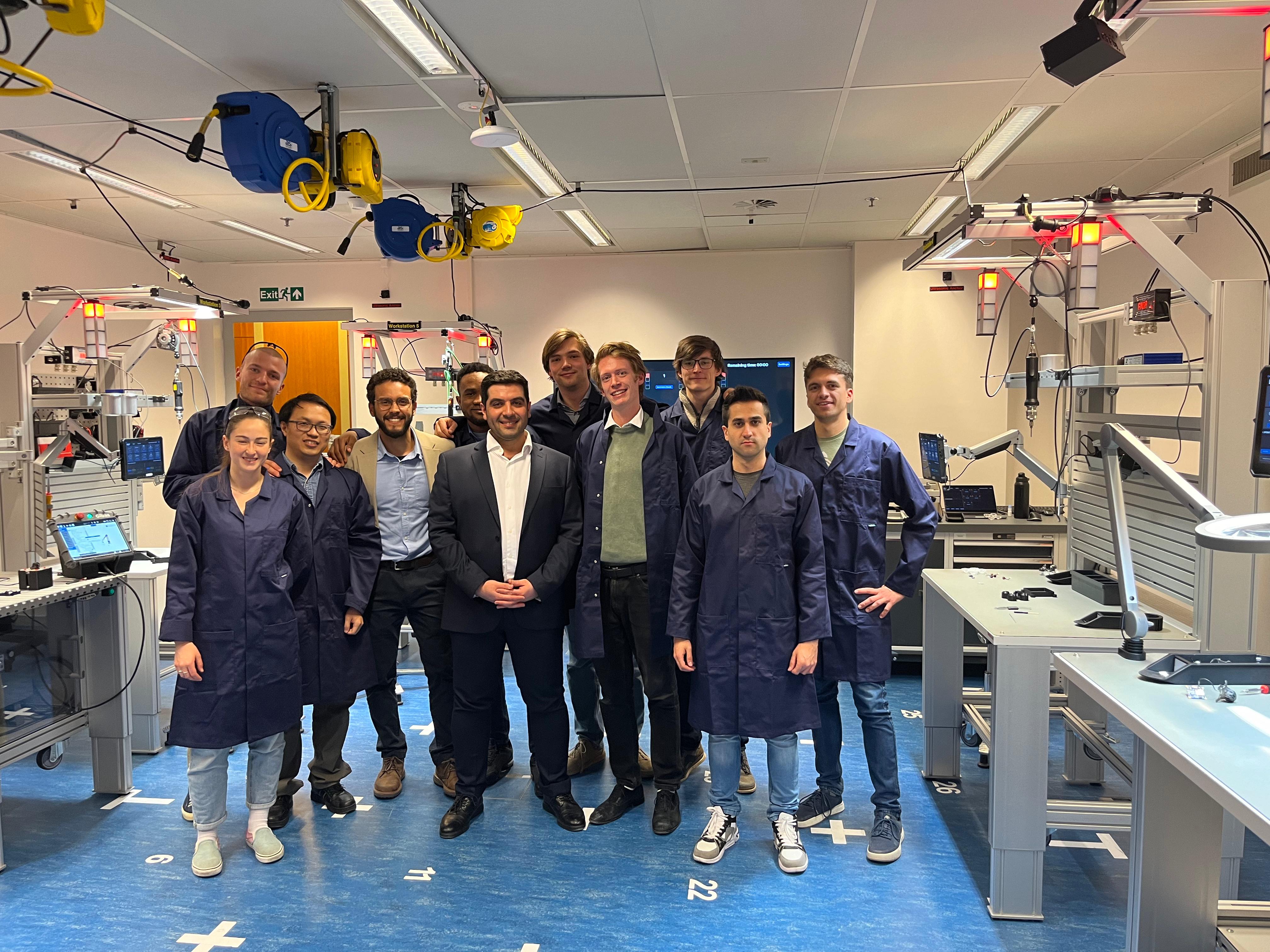
The extend of activities conducted through the LF is too extensive to cover within this portfolio. As development manager and strategic implementation engineer, my role was dedicated towards overseeing, coordinating, and contributing to all research, academic, and operational activities being undertaken by the LF team. This includes the development of products such as material ordering systems, digital twins, RTLS integrations, advanced sensing technologies, ergonomic workstations, CoBot capabilities, fixtures and jigs, but also the design of production systems, manufacturing scenario, and educational experiences, as well as managing the team itself.
Digital Twin of the final production system that was setup:
Educational activities:
An example of one of the many workshops, tutorials, and lectures given within the confines of the Learning Factory to aspiring product designers and production engineers can be seen in the video below. Here, the students were tasked with designing a mass-production scenario for a mass-customised product (spinal prosthetic), where they first explored many scenarios virtually using the Digital Twin we build fully from scratch for them. Having selected the most promising production systems, they were able to set them up physically in the LF and to validate them.
Amongst the various facilitation given to numerous PhD students, bachelor and master students, I also wrote and published one paper within the realms of Learning Factories which received very high peer review grades.
Refer to my publication through this link: https://link.springer.com/chapter/10.1007/978-3-031-65411-4_4
Within the upcoming year, we plan to move the entire facility to a new building, expanding from the current 60m^2 to around 150m^2. Here we will become an integral part of the Engineering Technology faculties design and fabrication education line, providing engineering students with a tangible way to learn about assembly/production.
.jpg)