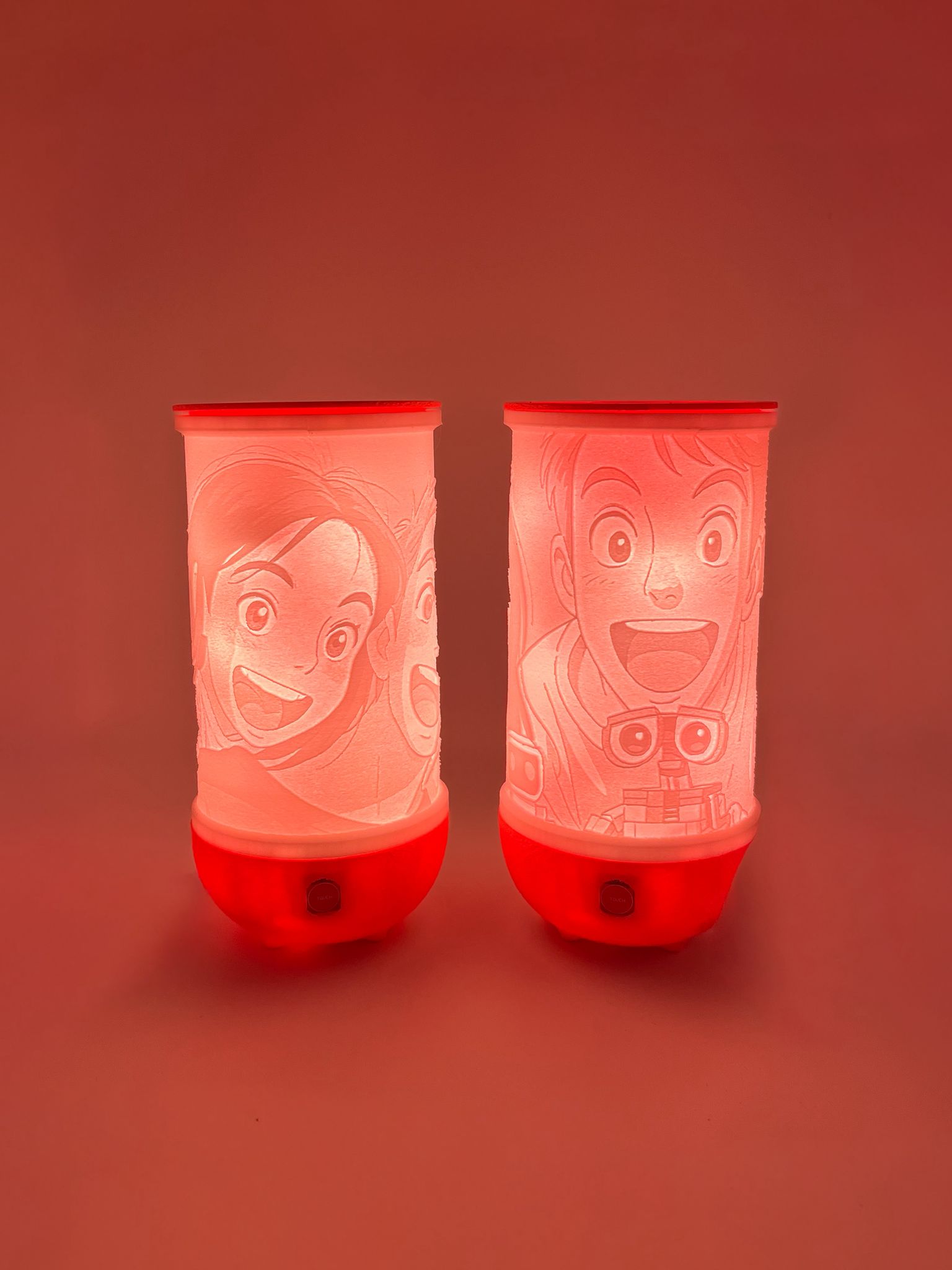


This mechatronic design project was driven by the broader challenge of tackling social isolation and loneliness through simple, human-centered design. The lamps serve as an easy communication tool for long-distance couples, allowing them to share presence and affection through light without words or screens. Beyond couples, the concept also extends to elderly family members who may not feel comfortable with smartphones or modern technology. Families can send subtle visual messages to show they are thinking of their loved ones, or use the lamp as a gentle notification system (especially valuable for grandparents who are hard of hearing and may miss phone calls). Inspired by anecdotal experiences and shared stories of elderly people struggling with isolation, the lamps were designed as aesthetic and emotionally meaningful objects that bridge distance in an intuitive way. Since no such product existed, the entire system had to be designed from scratch; from CAD assemblies and 3D-printed housings to custom electronics and fully bespoke code, ensuring it could be fabricated at home using readily available tools and components
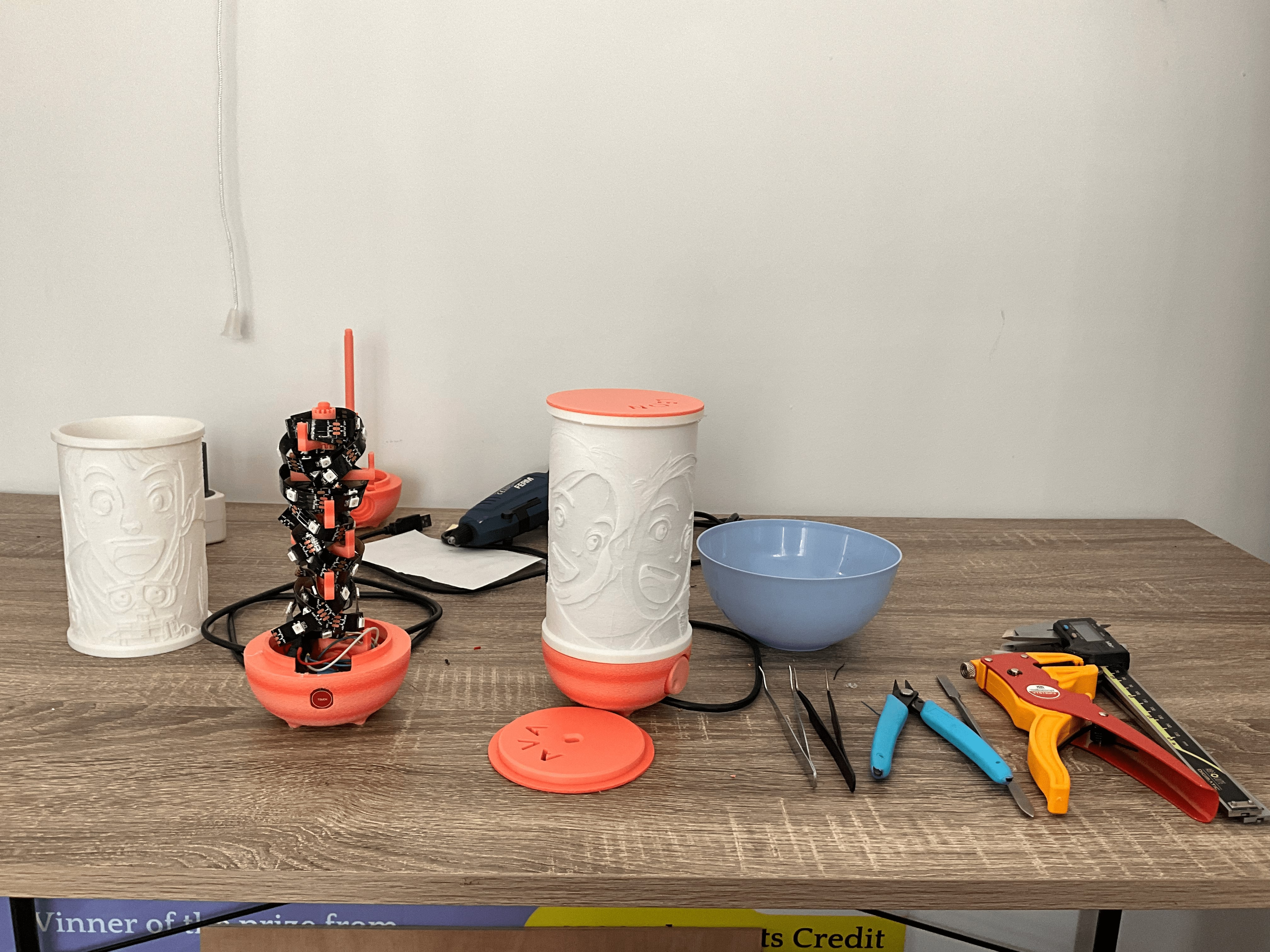
The lamp housing was designed in parametric CAD (SolidWorks) as a modular multi-part assembly that could be adjusted in size and fabricated using FDM 3D printing. To optimize print quality, large overhangs were avoided and the body was split into smaller components that could be glued together, eliminating the need for heavy support structures that compromise surface finish. A modular insert with universal interfaces was developed to hold the LED strip securely along the height of the lampshade without touching the shade itself whilst being easily reconfigurable. The electronics were integrated through dedicated parts: a snap-fit ESP holder exposing all soldered wire ports for accessibility, and a base with precise slots for the capacitive touch sensor and potentiometer, allowing them to click into place without adhesives. Additional beams in the base keep wiring and electronics neatly contained, preventing interference with the lampshade. This modular approach not only simplified fabrication but also supported the assembly process to be easier and maximises repairability since parts can be easily exchanged, aligning with Design for Maintenance principles.
%4016x-8.png)
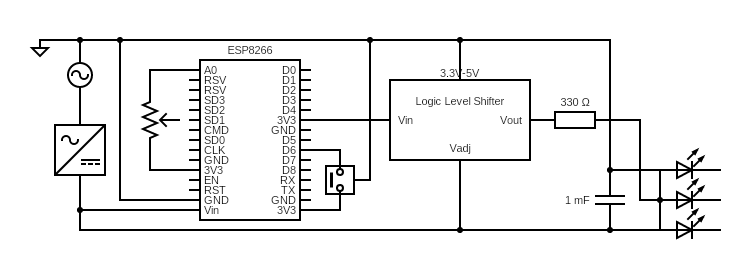
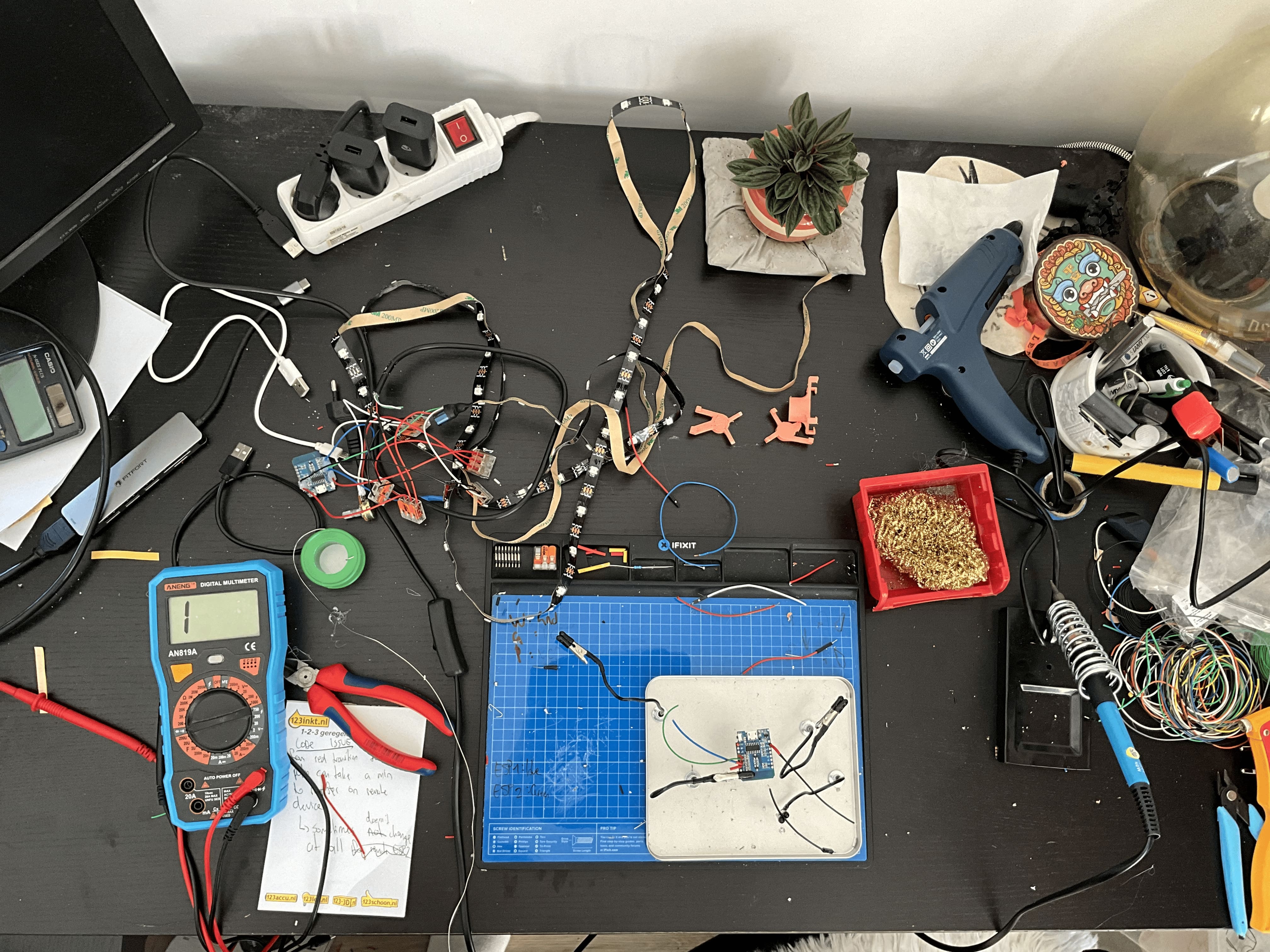
The lamps were built around Wi-Fi–enabled ESP8266 microcontrollers, which handle both the LED control and the wireless communication. Each lamp sends data packets through a third-party IoT API, acting as middleware so the two units can seamlessly mirror each other’s state across distance. To ensure stable power delivery to the individually addressable LED strip, a 1000 µF capacitor was added across the terminals, while a hard-wired potentiometer provides manual brightness adjustment. Since the lamp is intended to stay always-on, a brightness dimmer was essentially to ensure it is visible in daylight but can also be dimmed sufficiently at nighttime to act as a nightlight. A capacitive touch sensor was integrated as the main input, allowing users to interact with the lamp intuitively through a simple tap. Throughout the process, every element (from circuit design to CAD modeling, housing fabrication on 3D printers, and custom coding) had to be prototyped, tested, and refined to achieve both technical reliability and a seamless user experience.
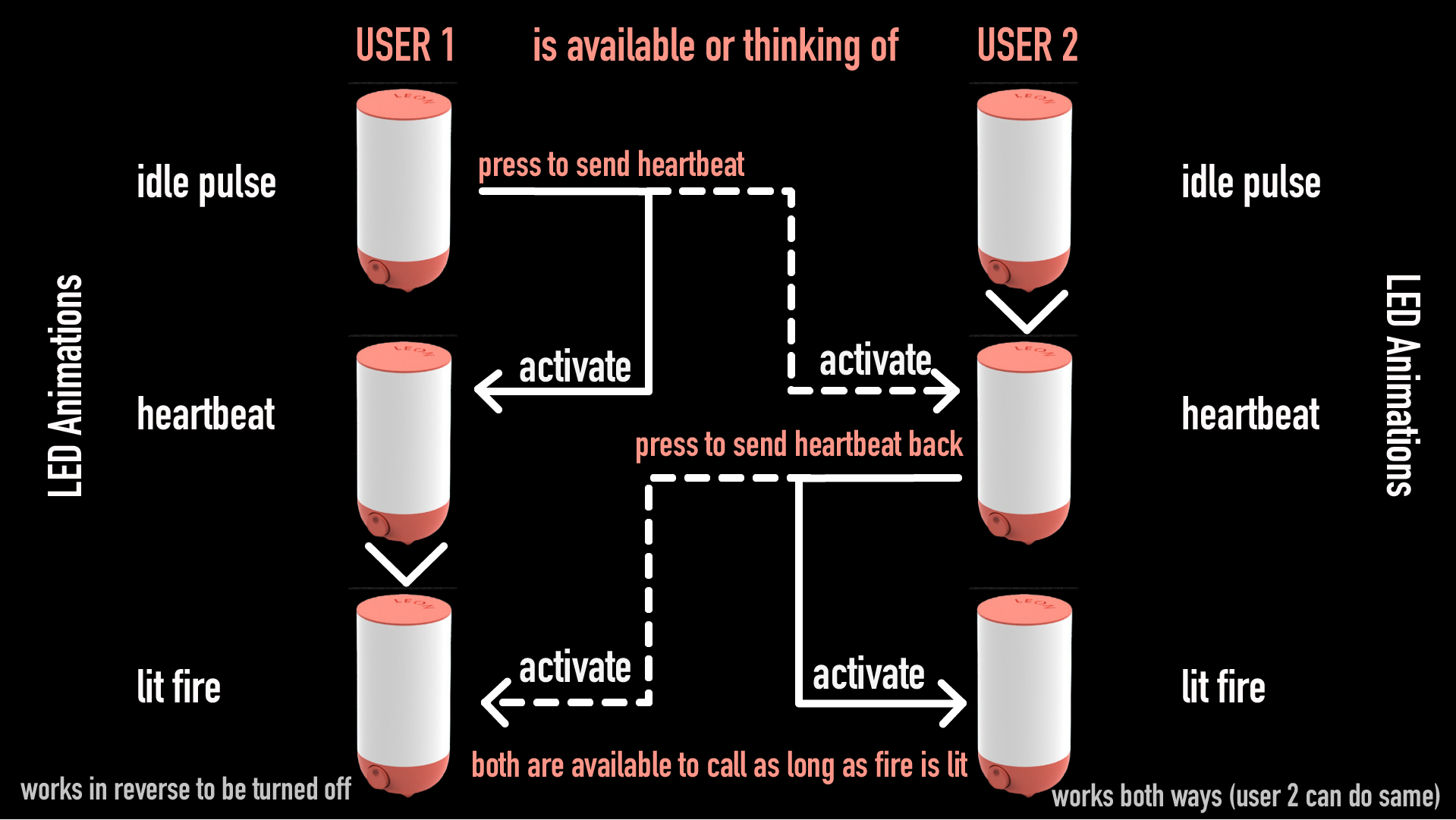
The lamps were programmed using Arduino for the ESP8266, with the code structured around efficient state management and lightweight animation logic. A key focus was minimizing processing load on the microcontroller to reduce heat buildup: for instance, the breathing light effect was implemented with an approximate polynomial function instead of a computationally heavier sine curve. Communication was likewise optimized by limiting the number of messages sent to the IoT broker, ensuring smooth synchronization without unnecessary data traffic. The program integrates interrupt-driven capacitive touch sensing for reliable user input and a robust synchronization routine to keep both lamps aligned across reboots and network interruptions. Together, the logic balances performance, stability, and responsiveness while keeping the ESP’s overhead to a minimum.
The main challenge was keeping two Wi-Fi lamps perfectly in sync, even across reboots of one lamp and network hiccups. At first, they could wake in the wrong mode if one lamp changed mode whilst the other was turned of, misread “on” as “off,” or drift out of sync if updates were missed. To solve this, I added a startup state check so each lamp always refreshes the other’s status on boot, improved how values are read so “100” is never mistaken for “0,” and made the lamps recalculate their mode on every update to avoid stale states. I also introduced a queued send system with retries, plus smart polling with automatic recovery if updates go quiet. Together, these layers of fixes ensured the lamps reliably start, run, and stay in sync without user correction
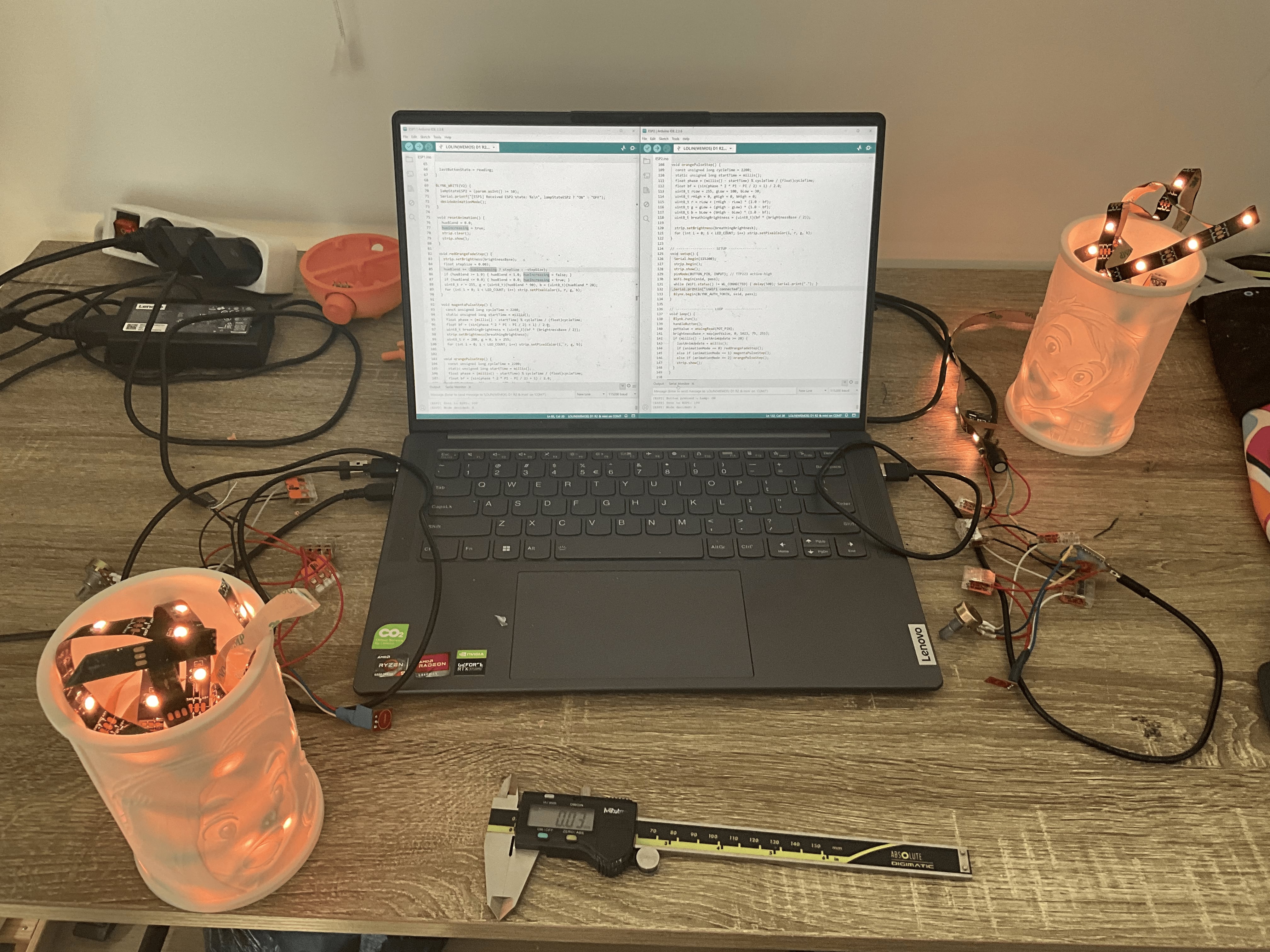
The outcome is a pair of remotely connected LED lamps that combine intuitive interaction, modular construction, and seamless connectivity. Each lamp integrates custom-designed 3D-printed parts to house the electronics and LED system, while capacitive touch input and adjustable brightness make them easy to use in everyday settings. Through Wi-Fi and a lightweight communication protocol, the lamps mirror each other instantly, creating a simple yet emotionally meaningful way to share presence across distance. The result is a fully functional prototype that demonstrates both the technical feasibility and the human-centered design intent of the concept.