

Educational faciliation goal: Any idea can be a great idea if you think differently, dream big and commit to seeing it realised. (Richard Brandson)
Chosen challenge space is mobility tinkering and tangible tinkering.
Goal
Facilitate quick and creative soapbox creation using (mostly) toolless/non-destructive attachment interfaces, leveraging any ubiquitous and abundant scrap materials, intended for 16-99 year olds
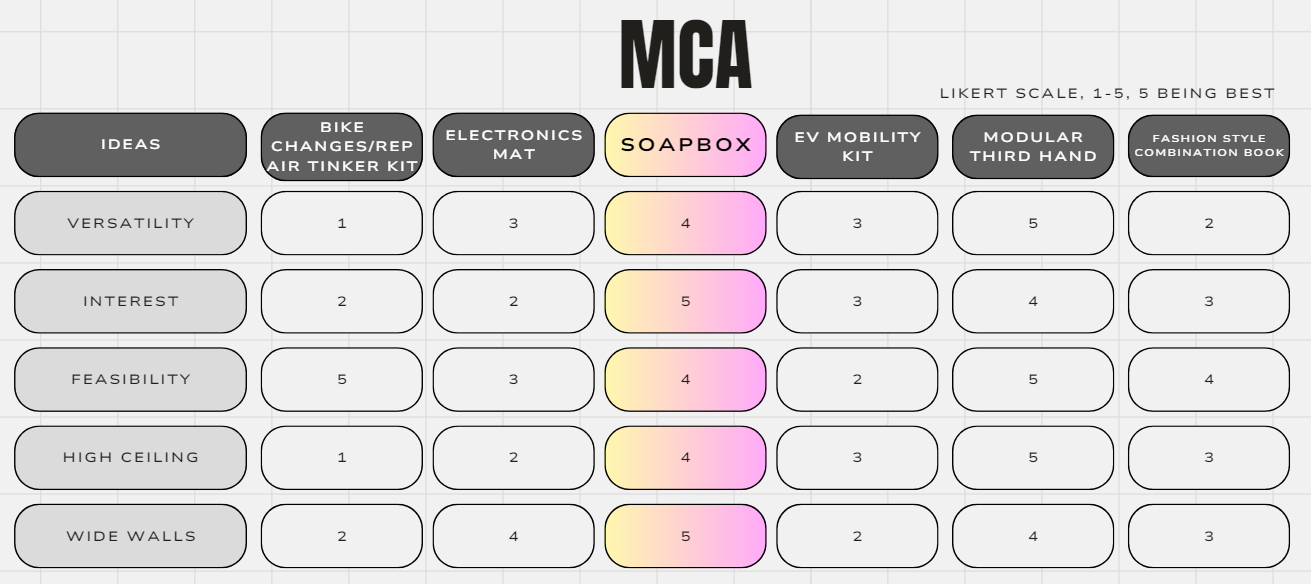
Multi-Criteria Analysis
Inspiration
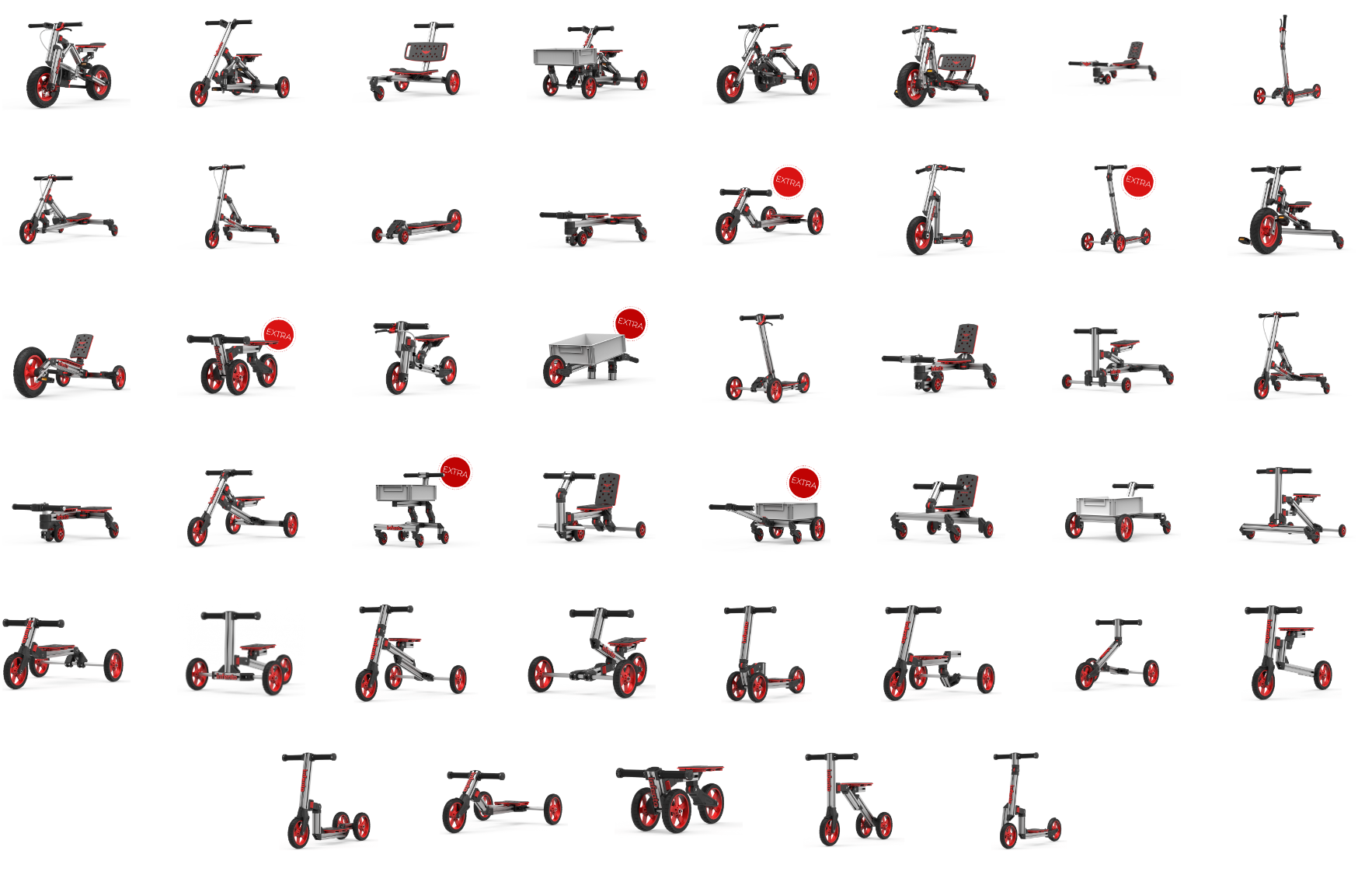
Inspired by Infento's modular vehicle design (https://www.infento.com/kits/), the need to expand accessibility, affordance, and lower the threshold for tinkering with vehicle designs was identified. Despite Infento's success, the high costs and proprietary nature of its standardised components limited broader adoption. Our vision for a car-building kit focuses on sustainability, affordance, and creativity, incorporating recycled materials into a cost-effective, modular system. This not only minimizes waste but also enhances affordability and creative freedom, allowing users to design their own vehicles in an environmentally conscious manner.

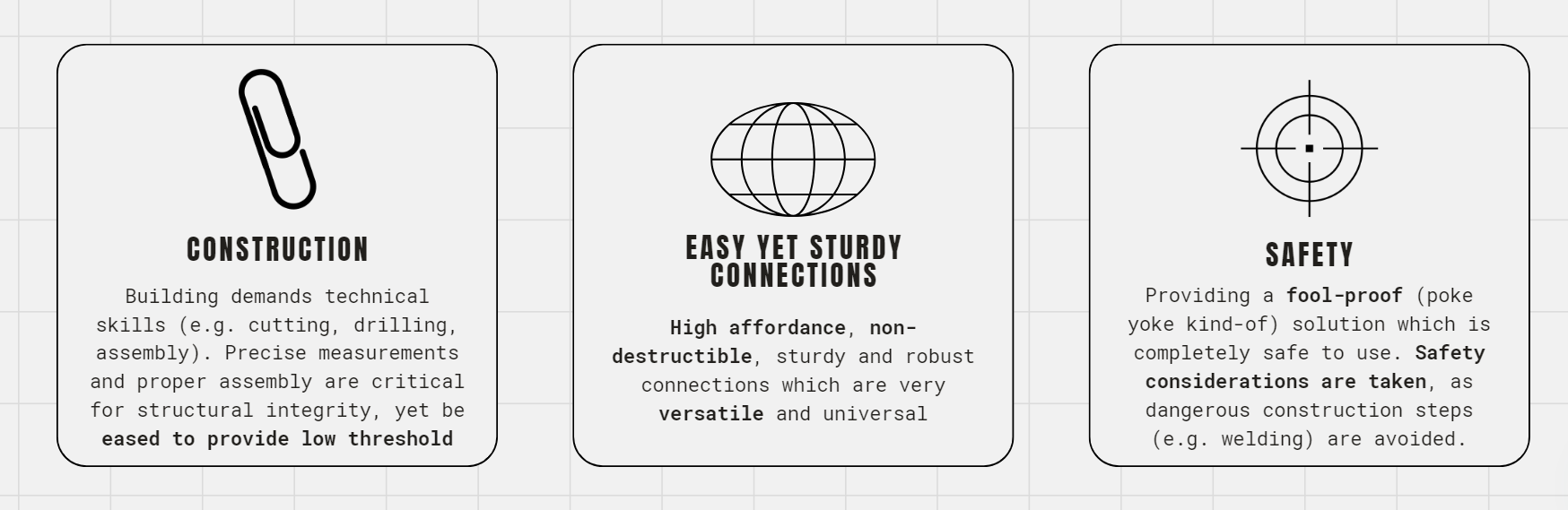
Low threshold and preciousness, encouraging the sourcing of unique building materials from their environment:
Components


Prototyping
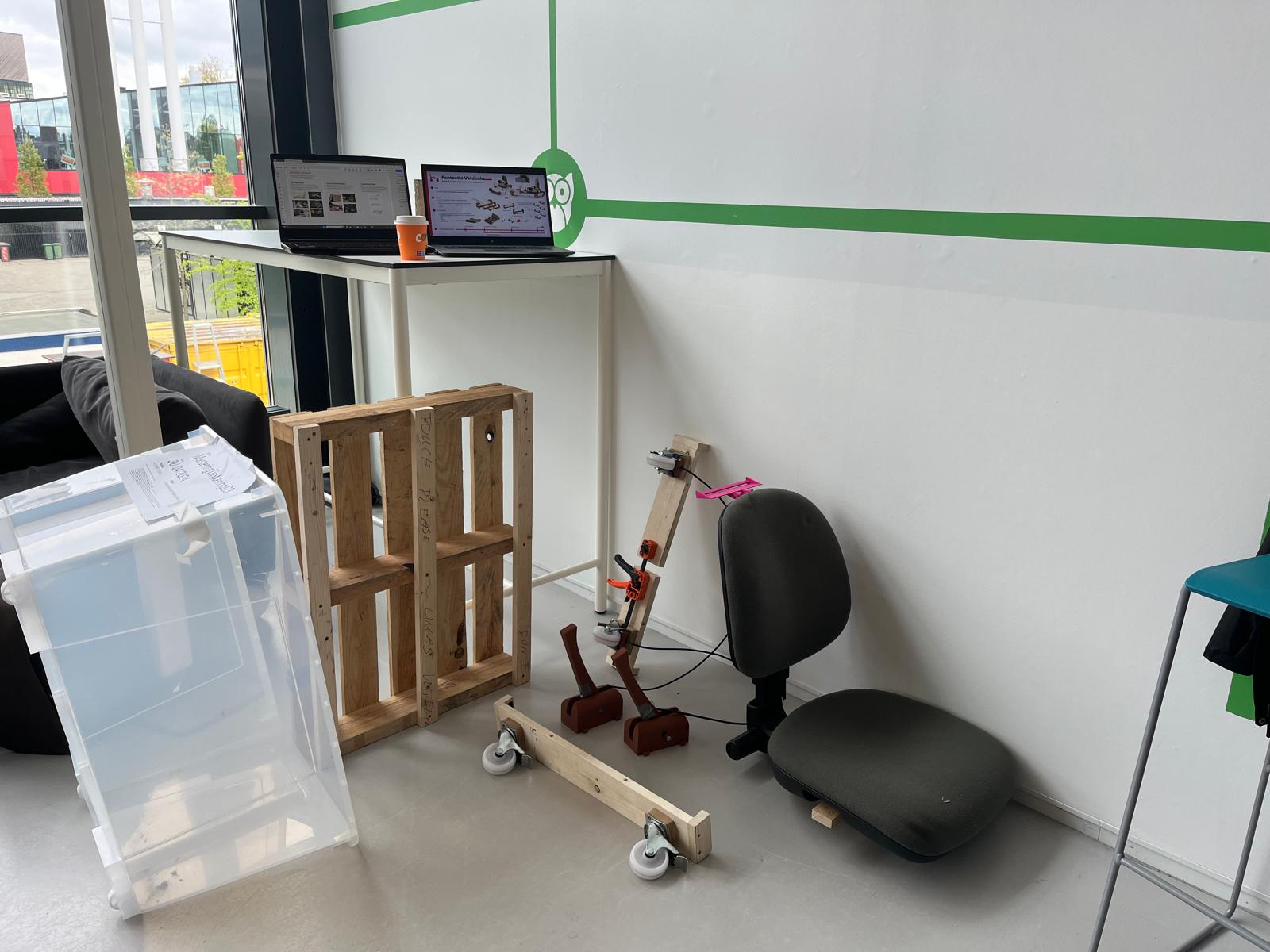
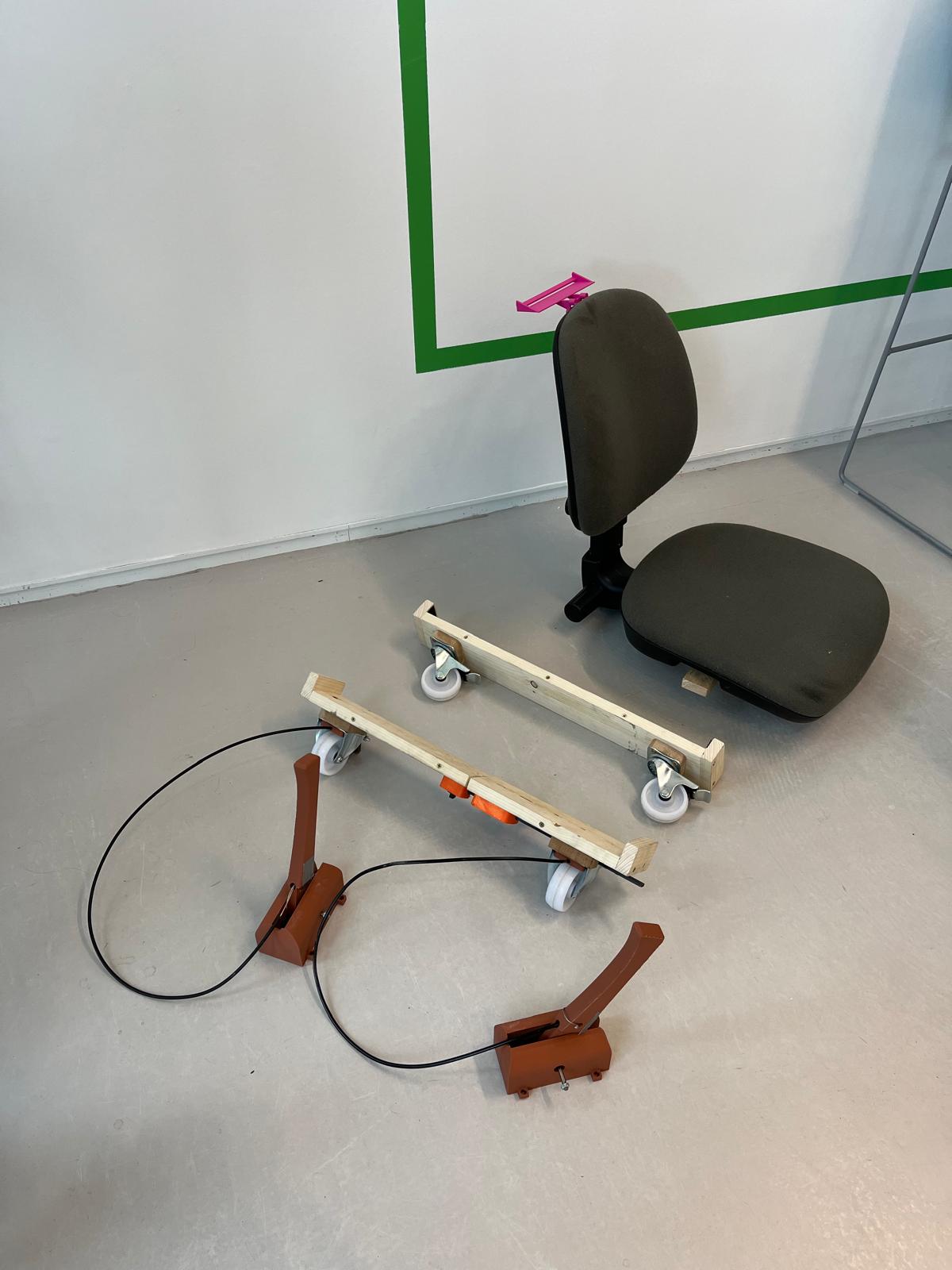
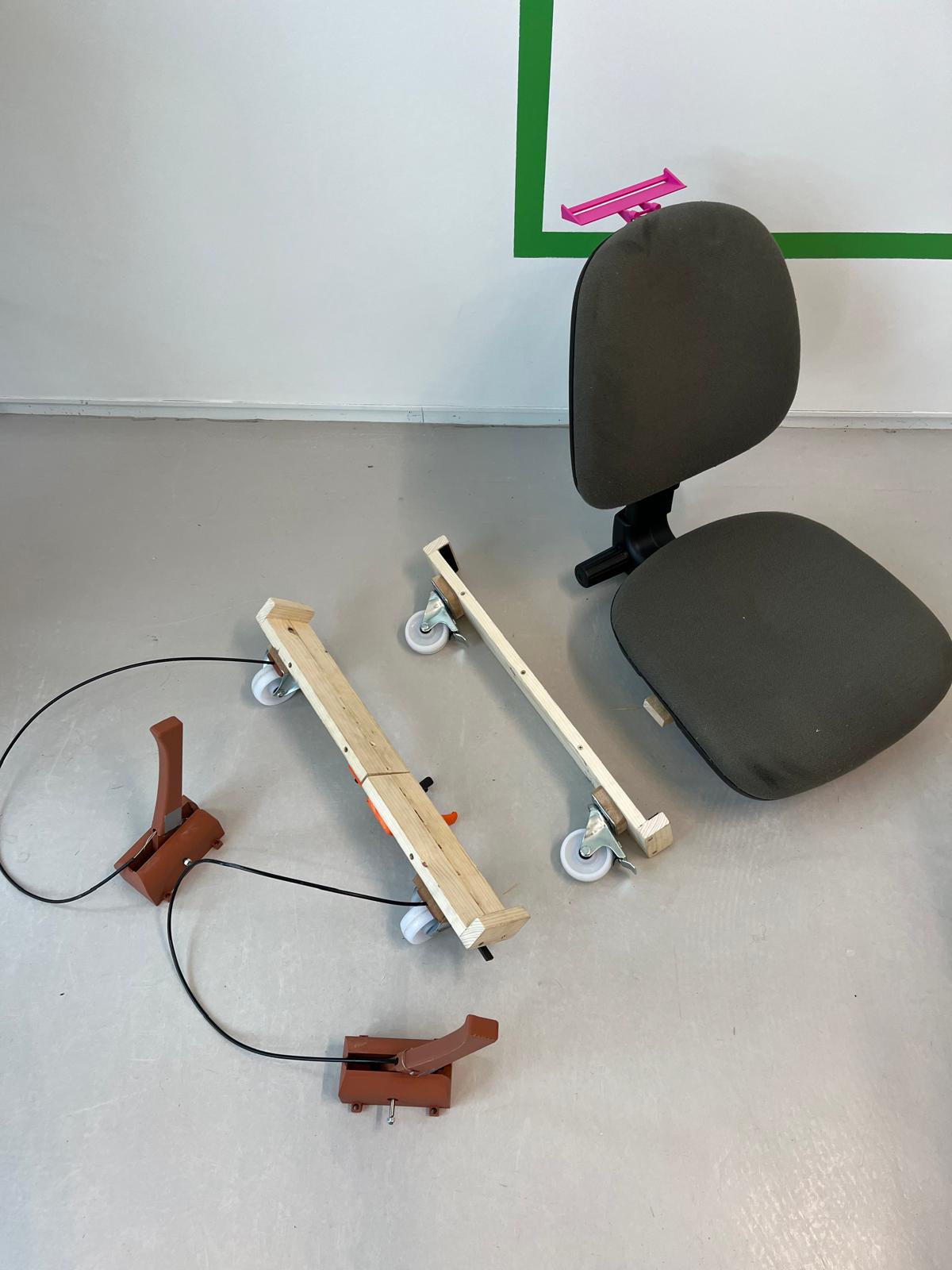
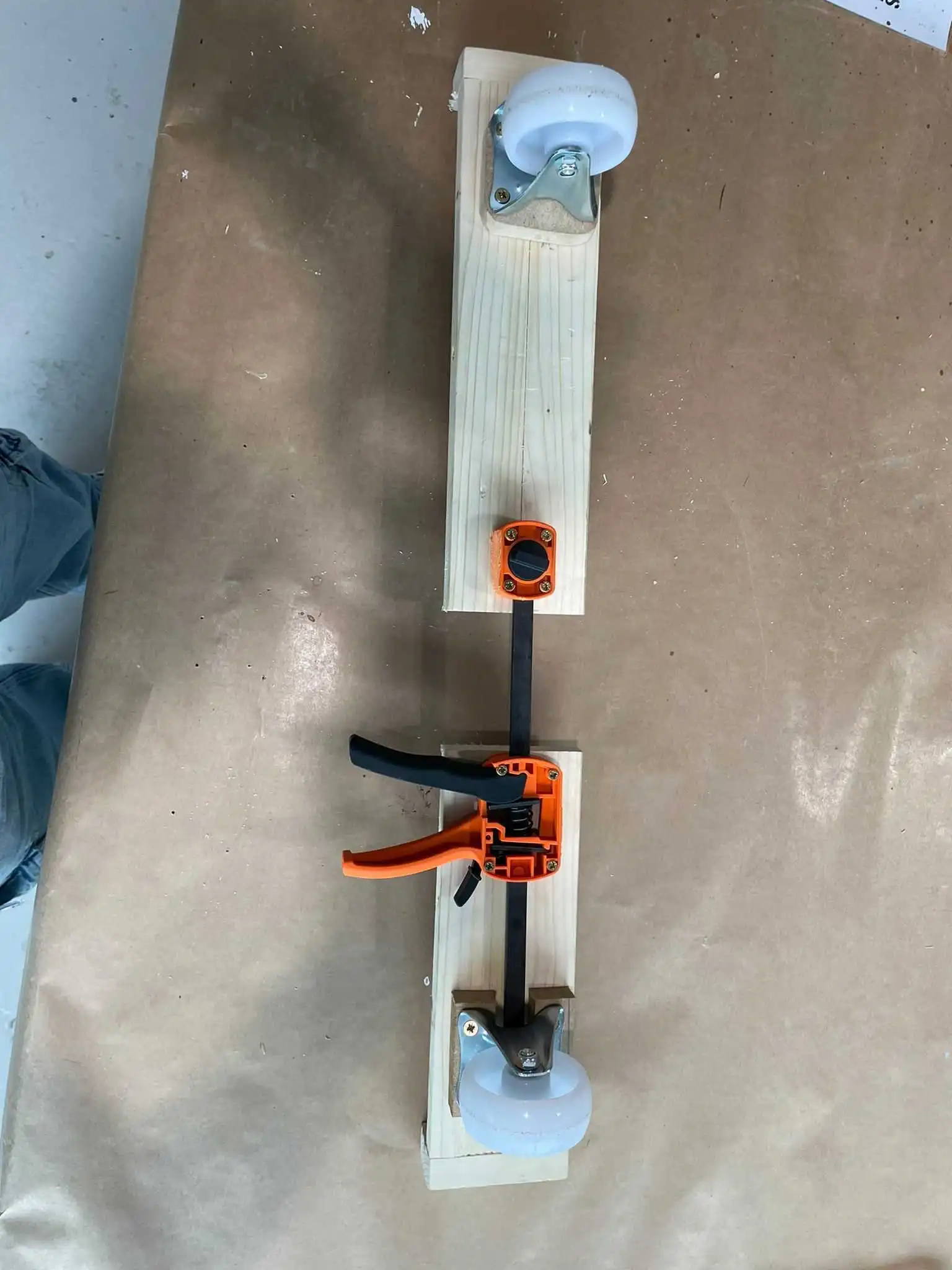
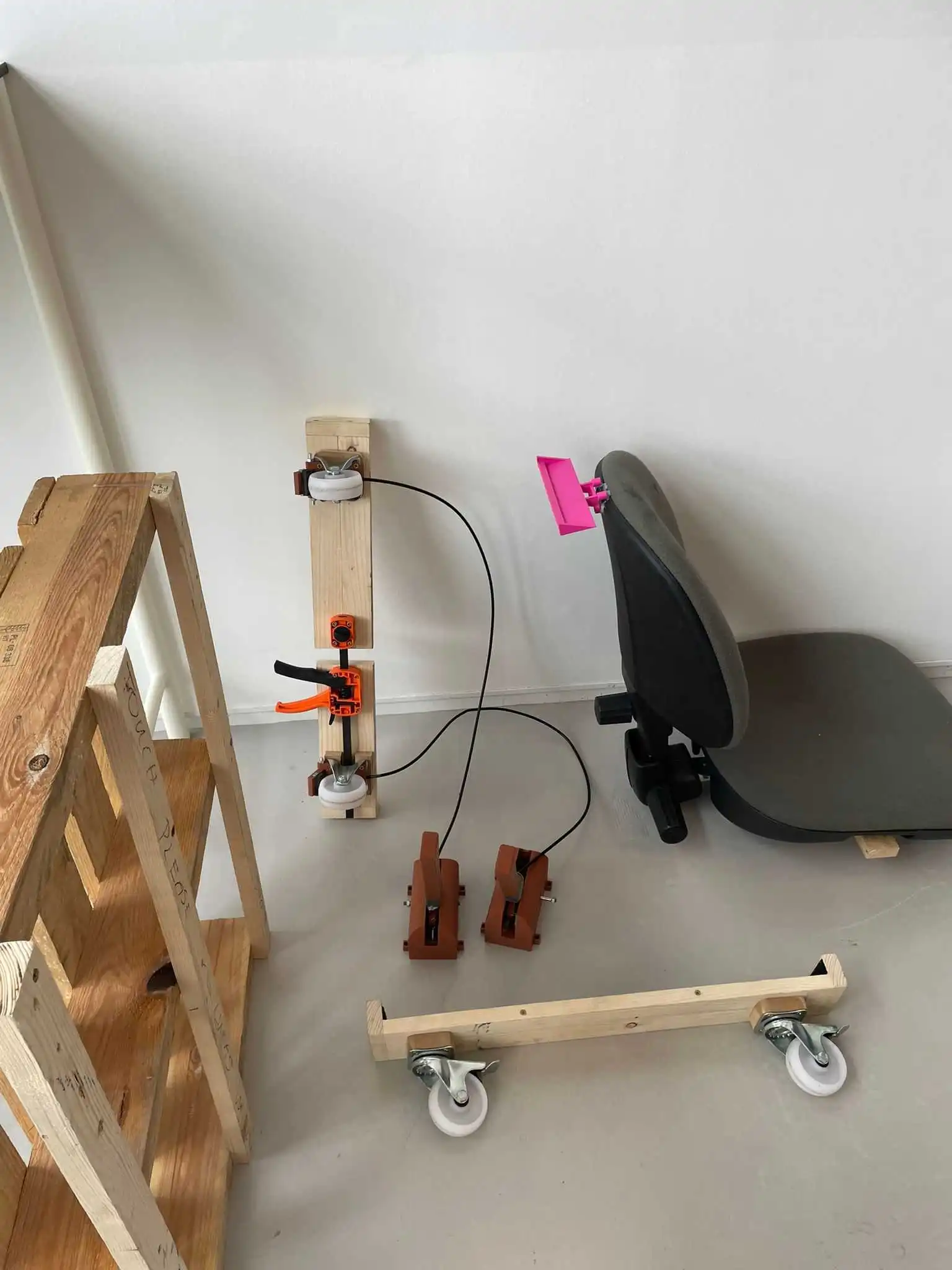
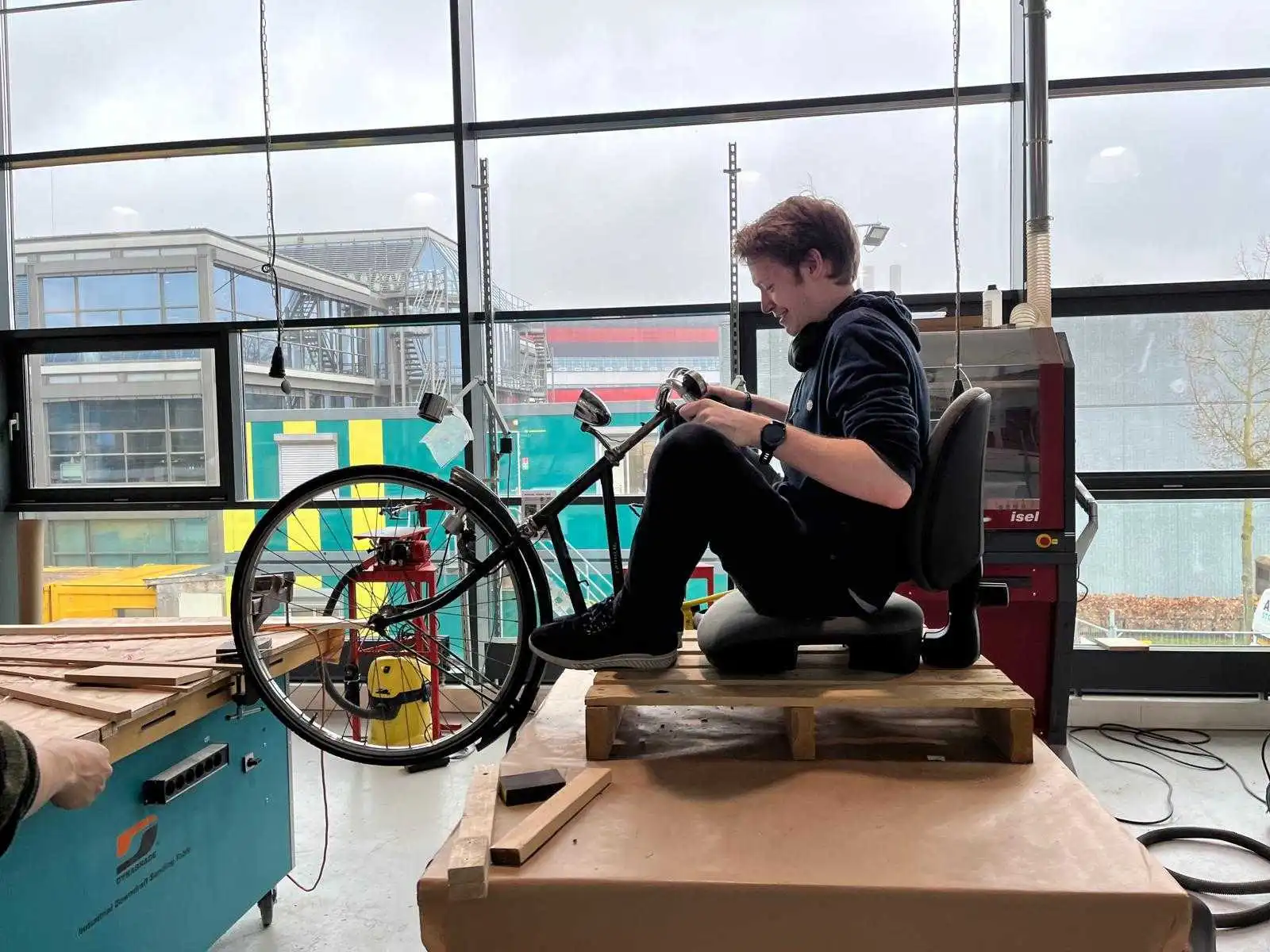
Using the lean tinkering methodology, lo-fidelity prototypes were made in quick succession, leaving room to fail often but fail quickly. This allowed for a more robust solution being thought off, since design insights were gained in a tangible manner through direct experience. A Proof-of-Concept was fathomed, showing the non-destructive clamps, tobogan-style braking system with integrated fail-safe, and the modular building capabilities.
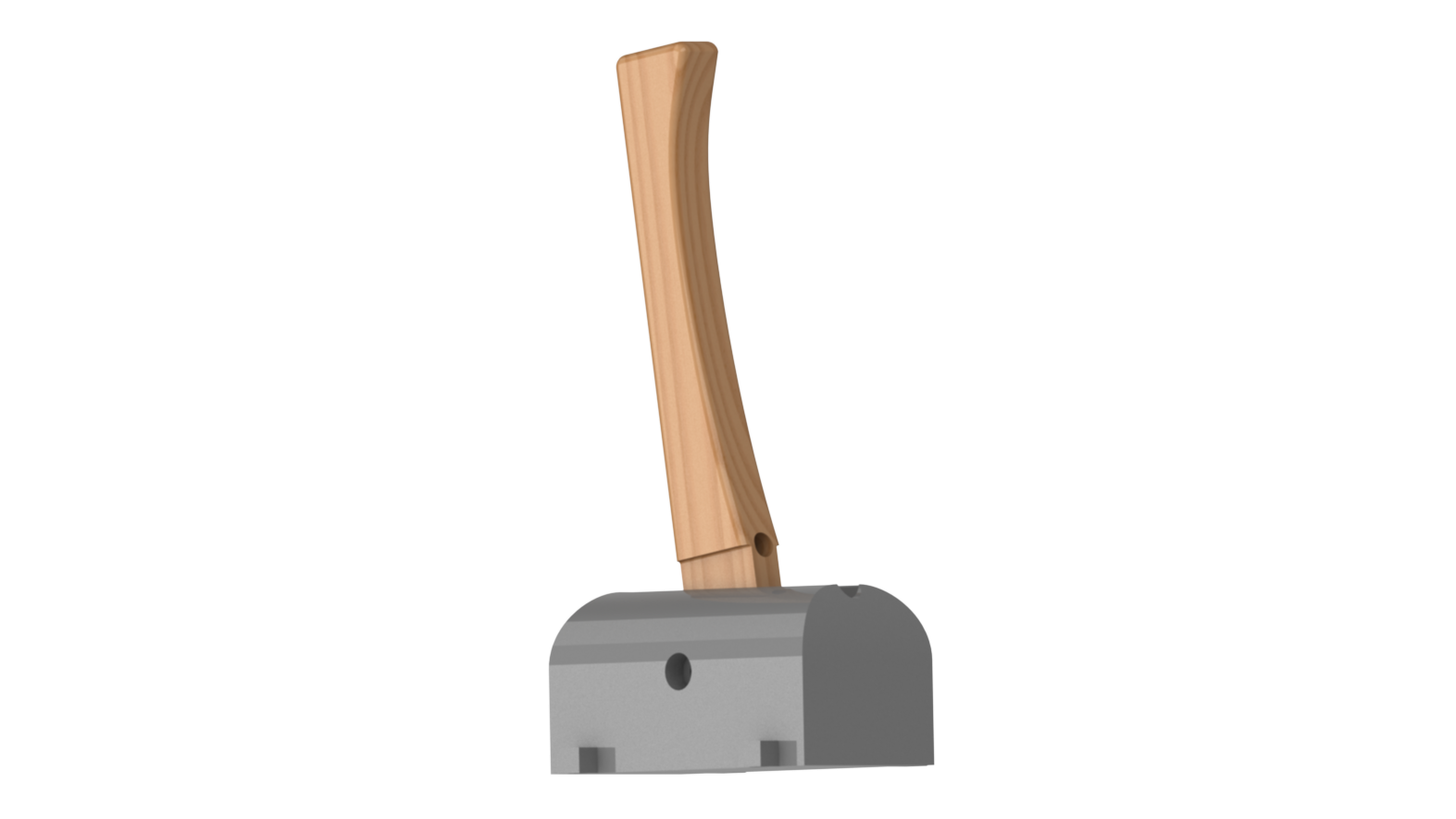
My contributions to this project were multifaceted, from concept design, to team leadership, whilst also covering much of the fabrication and prototyping. Whilst having direct input on almost all design decisions, I tried to provide the lens that ensures the tinkering toolkit is commercialisable and has market-appeal to later be turned to a real product. Concerning concrete contributions, I designed, modelled, prototyped, and refined the braking system, modelling it after the Tobogan-style system. This meant that, through spring-support, the resting position of the brake lever is in the 'braking' position, meaning that in case the rider loses hold of the brakes, the soapbox will automatically apply emergency braking.
A modular soap box platform designed for any classroom, allowing for the creative use of using any building blocks in the users surroundings. This product is characterised by non-destructive interfaces, interoperability with practically any building material leading to low preciousness, high affordance, and low threshold for use.
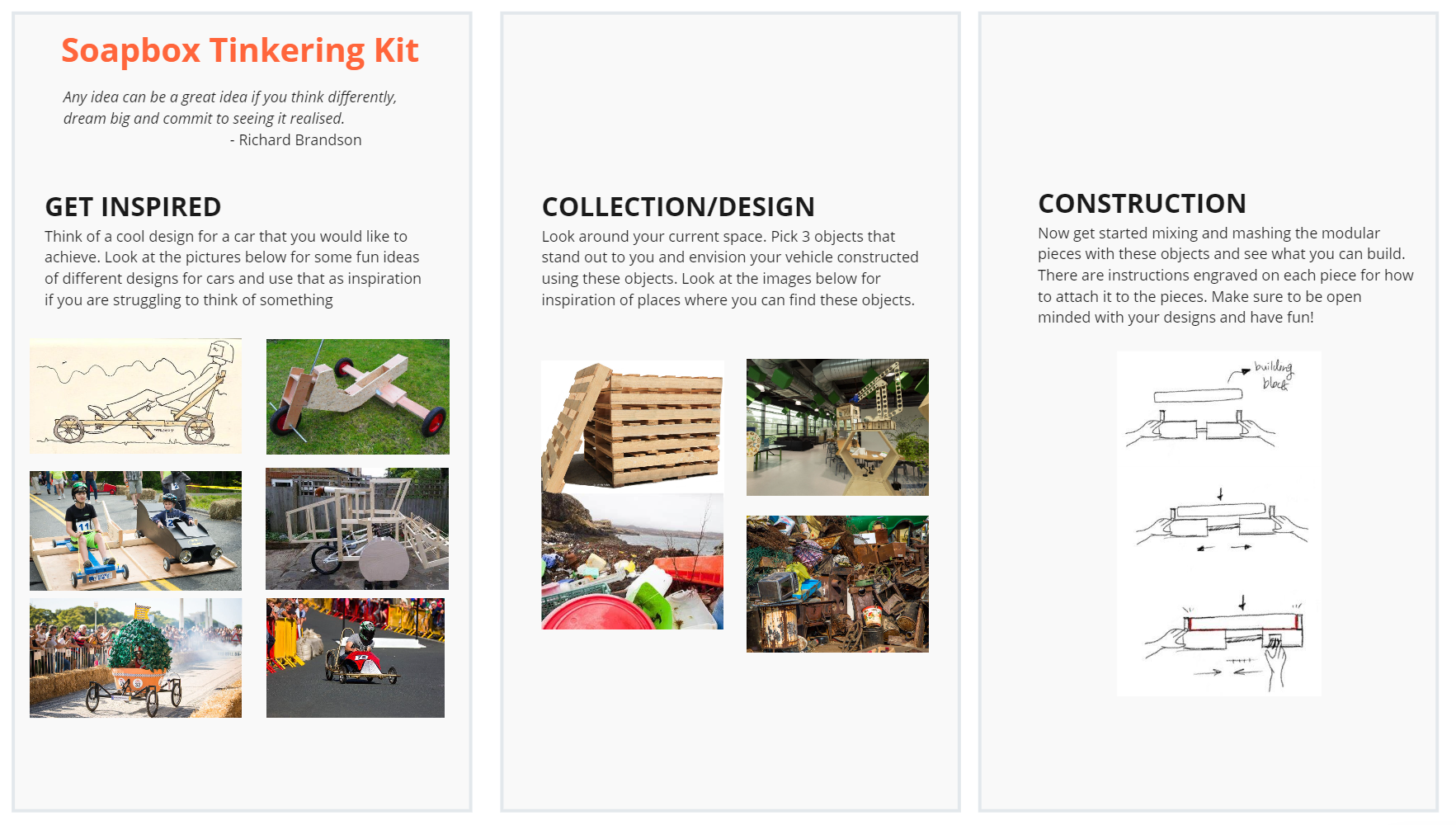
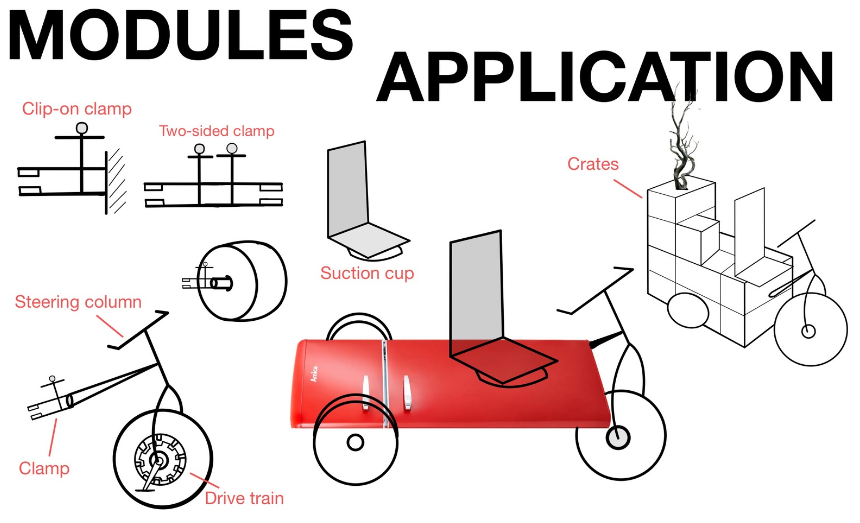
The idea behind this product is that users get a handful of standard l components that are functionally and safety-critical for making soapboxes. Through the use of non-destructive, universal clamps, the users can seek to find any interesting materials in their surroundings (e.g. old appliances such as fridge doors, crates, old furniture, tree branches, etc.) which they can use to build the structure of their own soapbox.
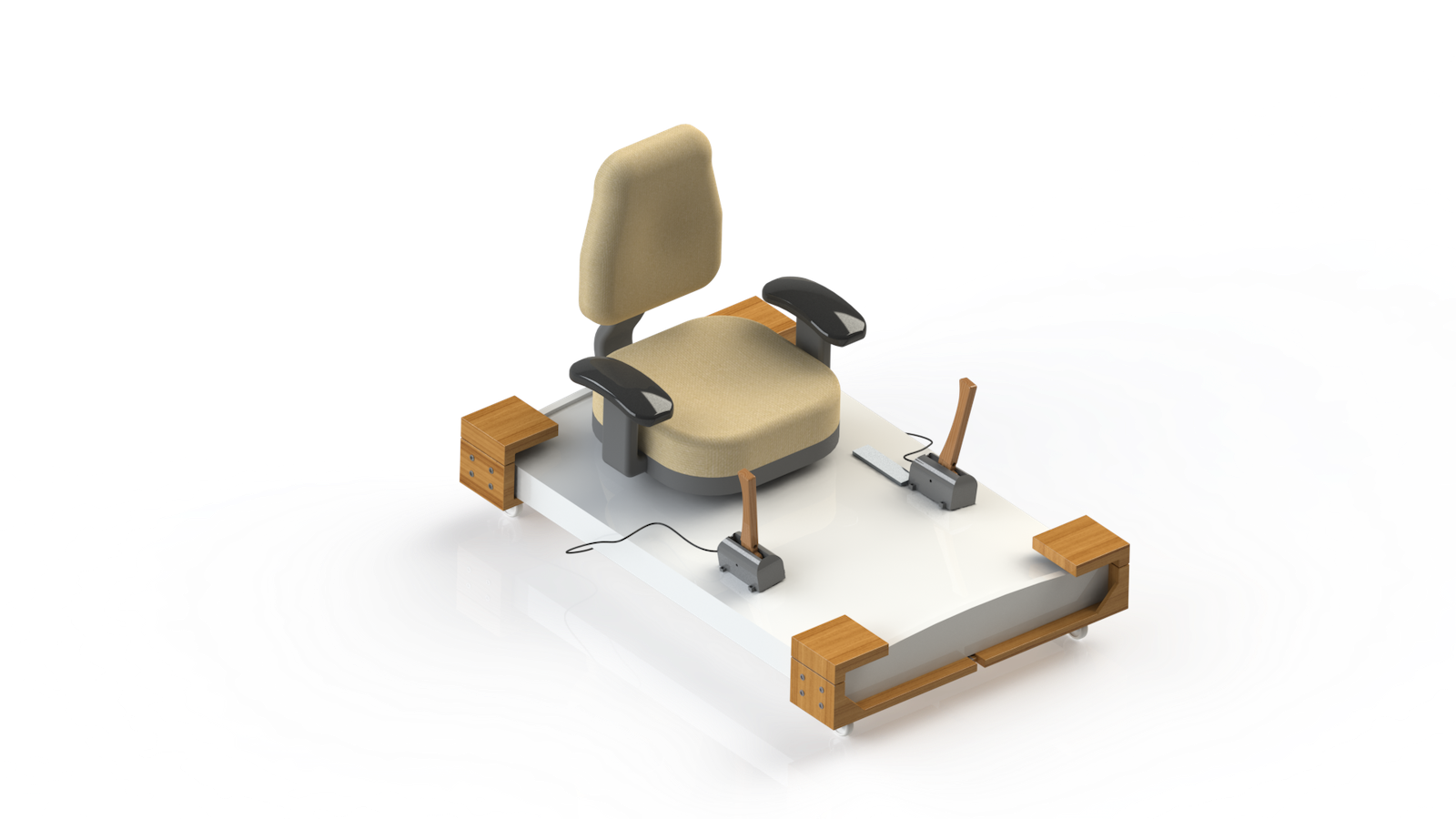
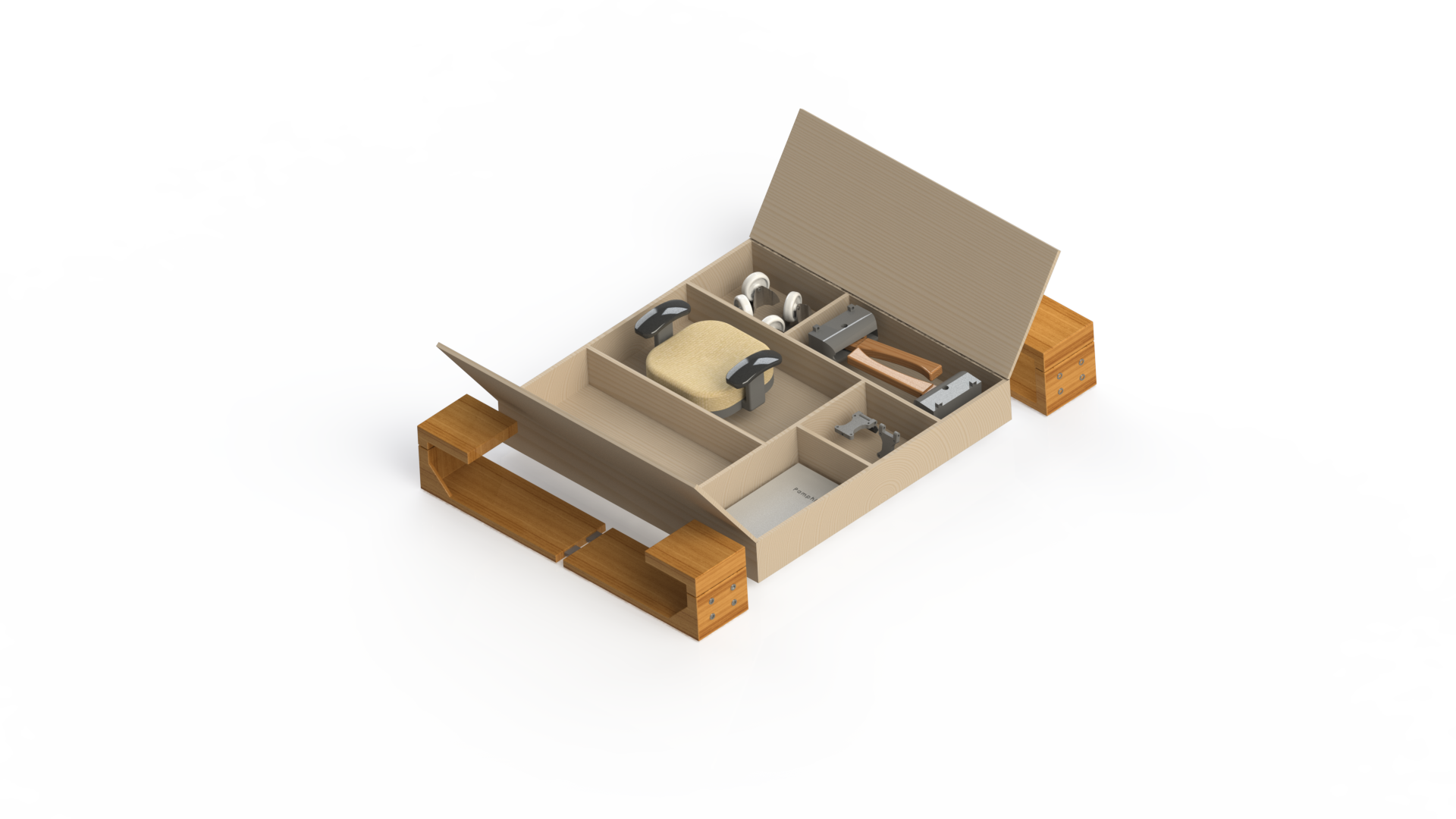
Kit Contents
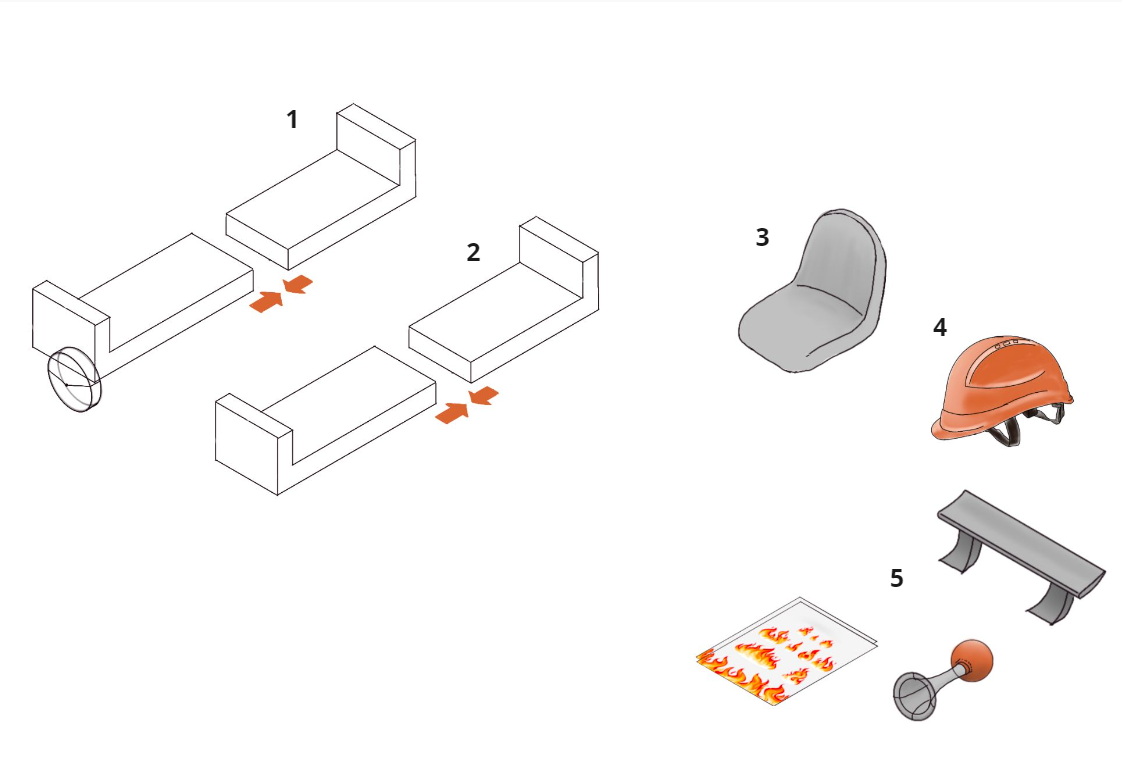
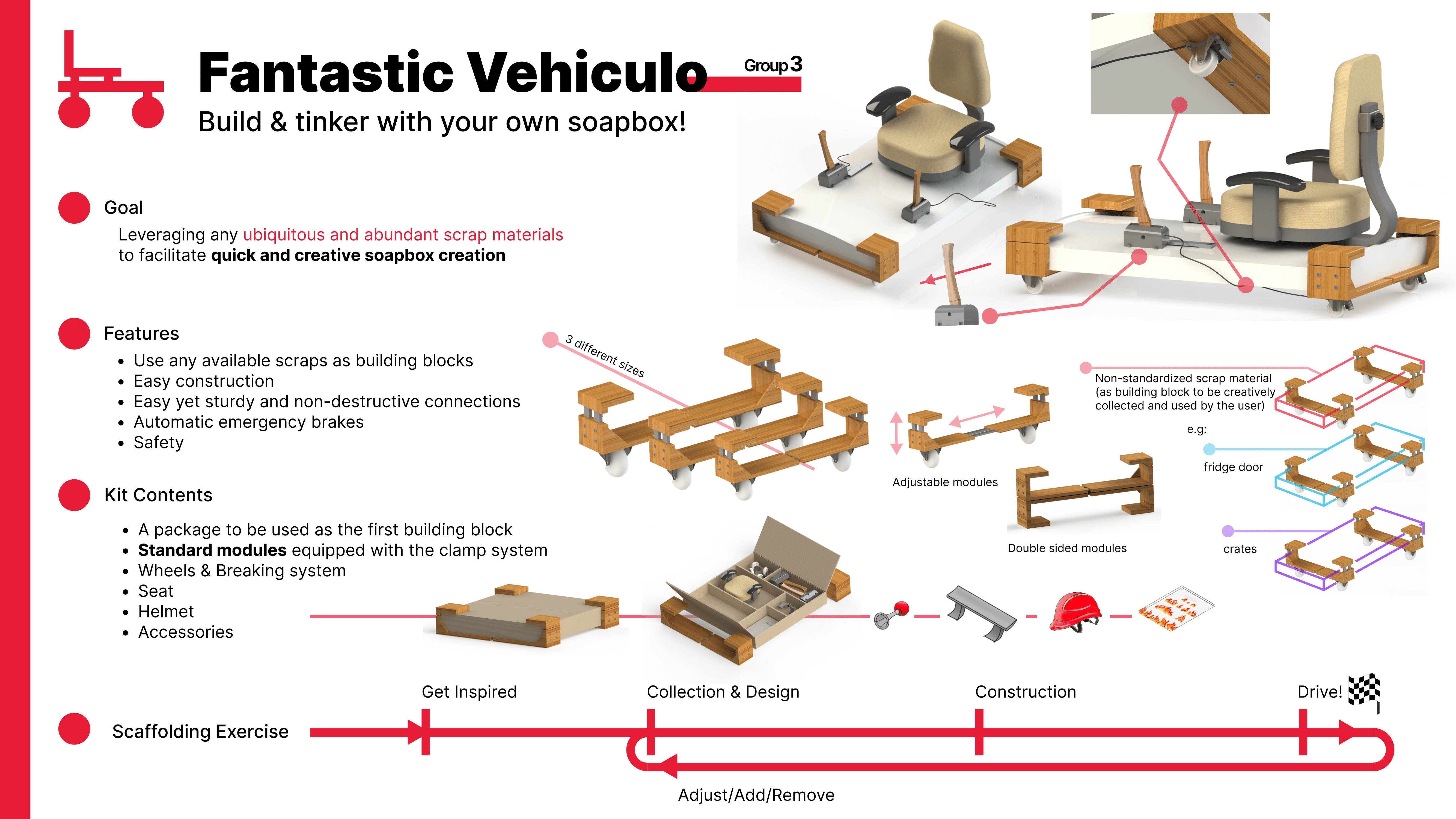
The colored renders are the standard modules provided. The white/blank components are placeholder to represent the essentially limitless options of building materials that can be sourced from the users environment.
Improvements & Next Steps
The design process focused primarily on the hardware and toolkit interactions. However, developments of the scaffolding exercise and user experience was slightly limited. For next steps, more scaffolding elements to creatively stimulate users in their constructions and sustainable material usage could be implemented. The packaging that the kit comes in is envisioned to be the first ‘building block’ that they can make use of, representing the inspiration towards finding more scrap materials in their environment to add to their soapbox design. Another possible avenue is the use of cards to describe different material types and their properties, probing different vehicle constructions or configurations, and providing challenges to trigger interesting constructions using different materials.
Additionally, a higher fidelity prototype should be created to conduct more thorough user testing beyond the three UI tests that were conducted for the premise of this project. This allows for better interaction design in the kit. Lastly, the current kit is focused on gravity-powered soapboxes. However, more modules could be designed that allow for mechanically-driven, pedal-powered, or even electrified drive elements.
.jpeg)
.jpeg)