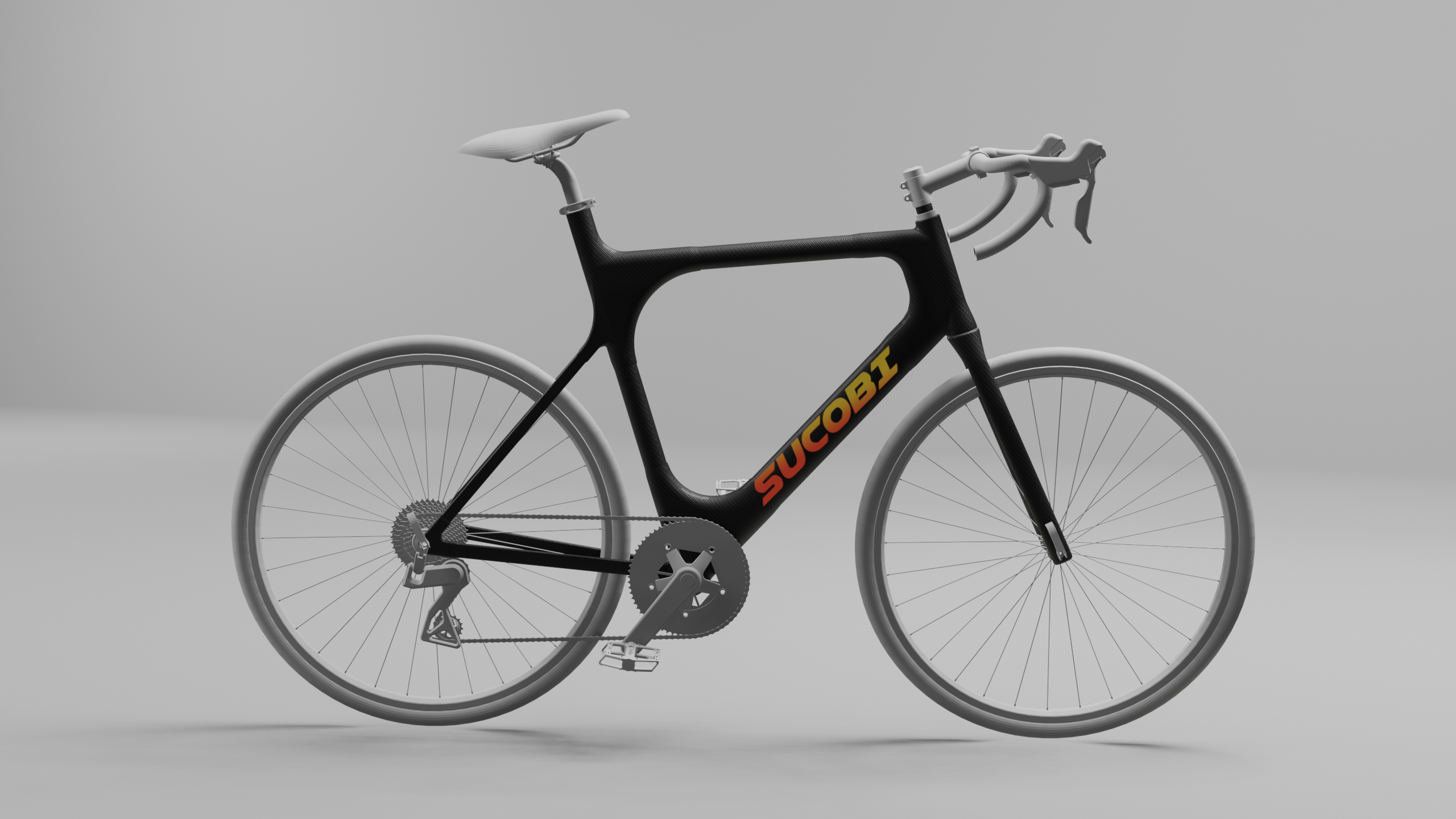
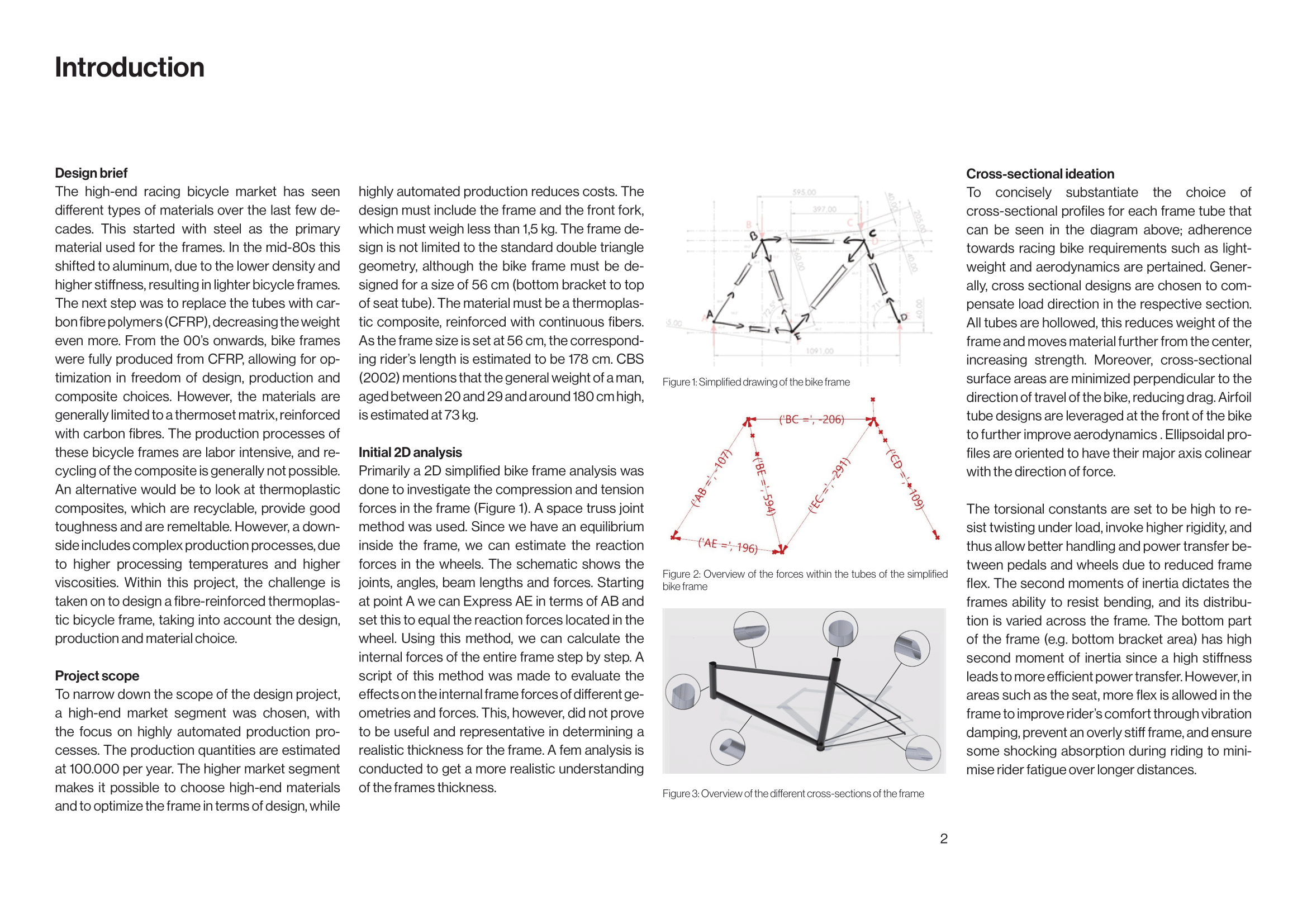
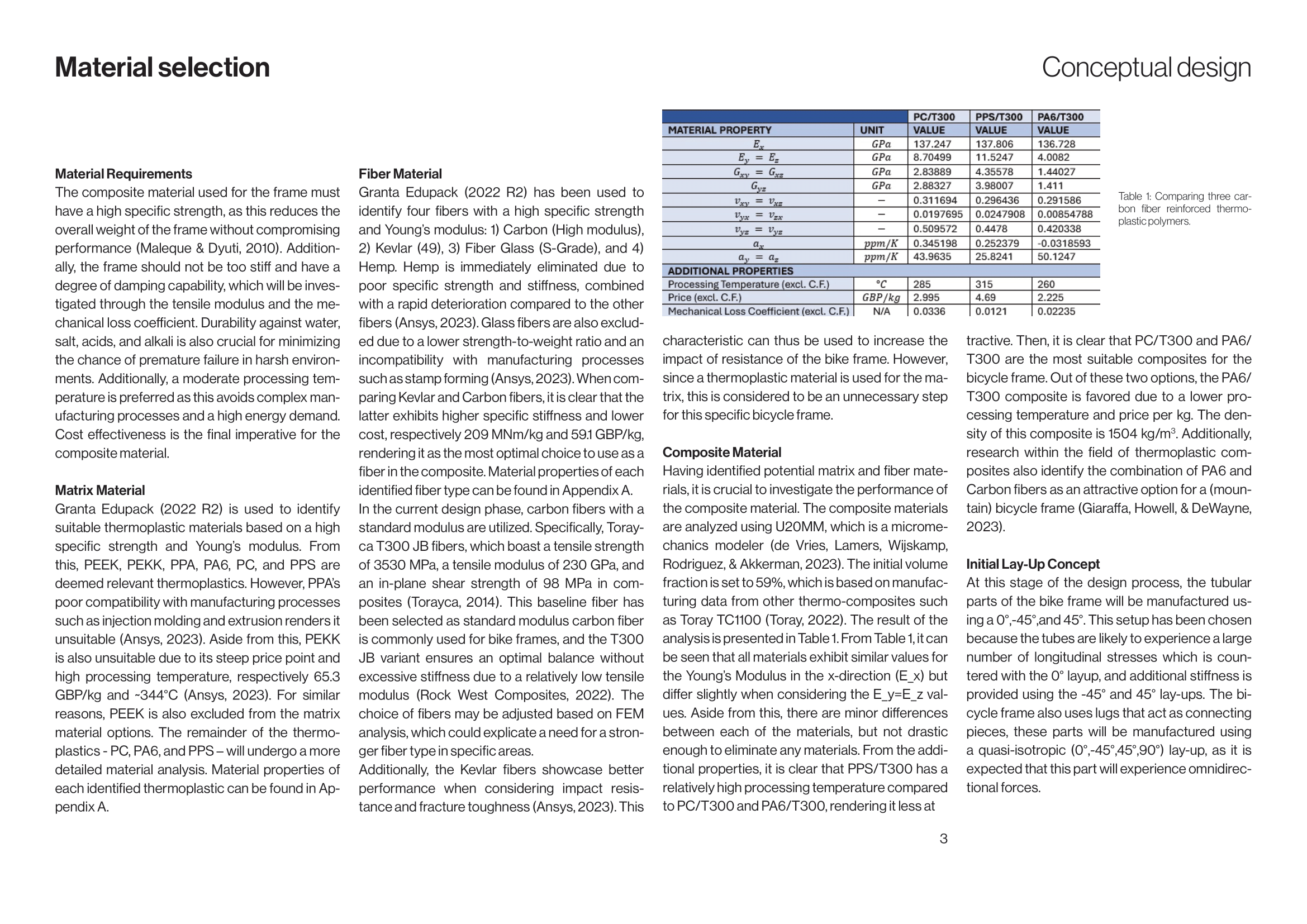
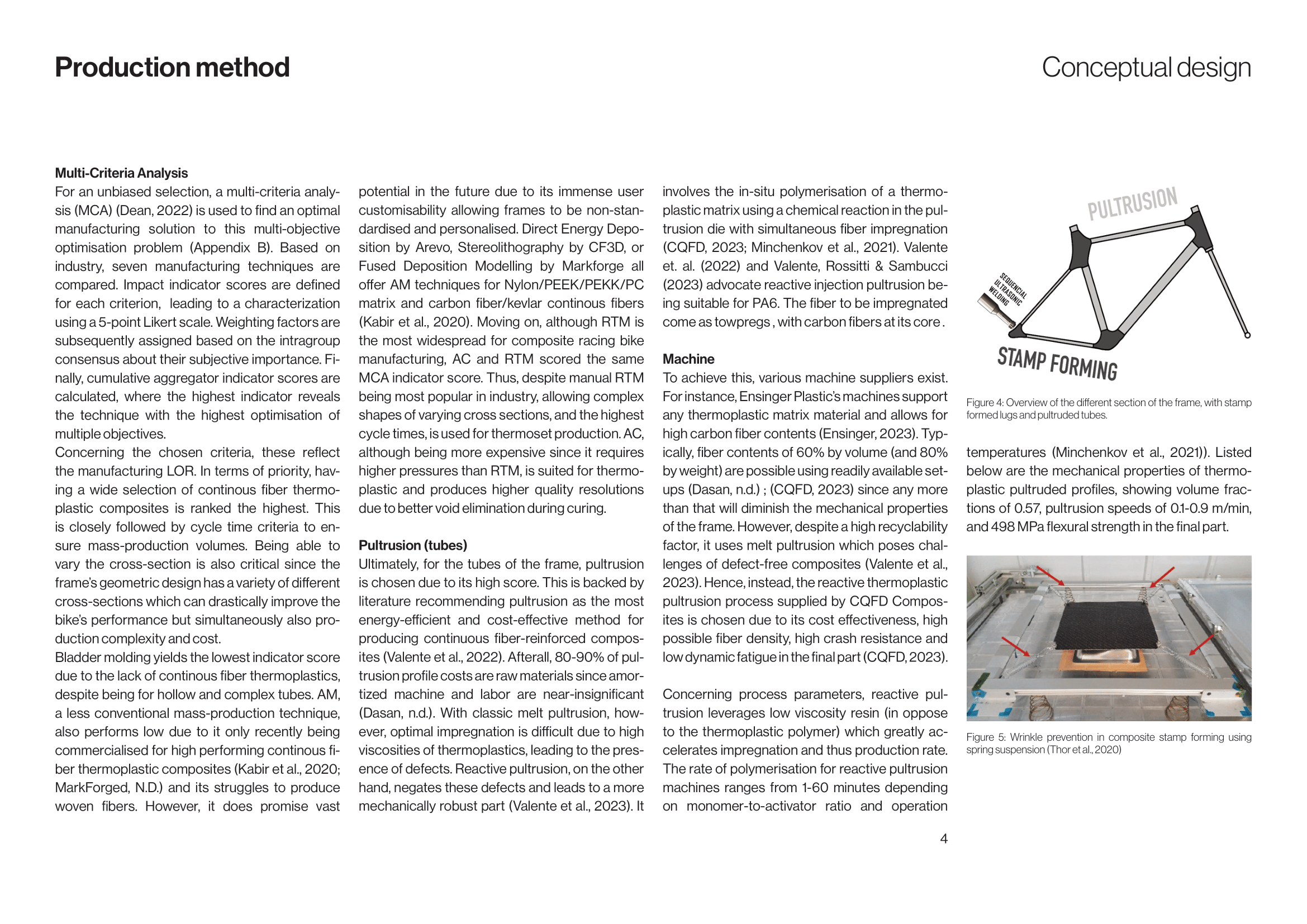
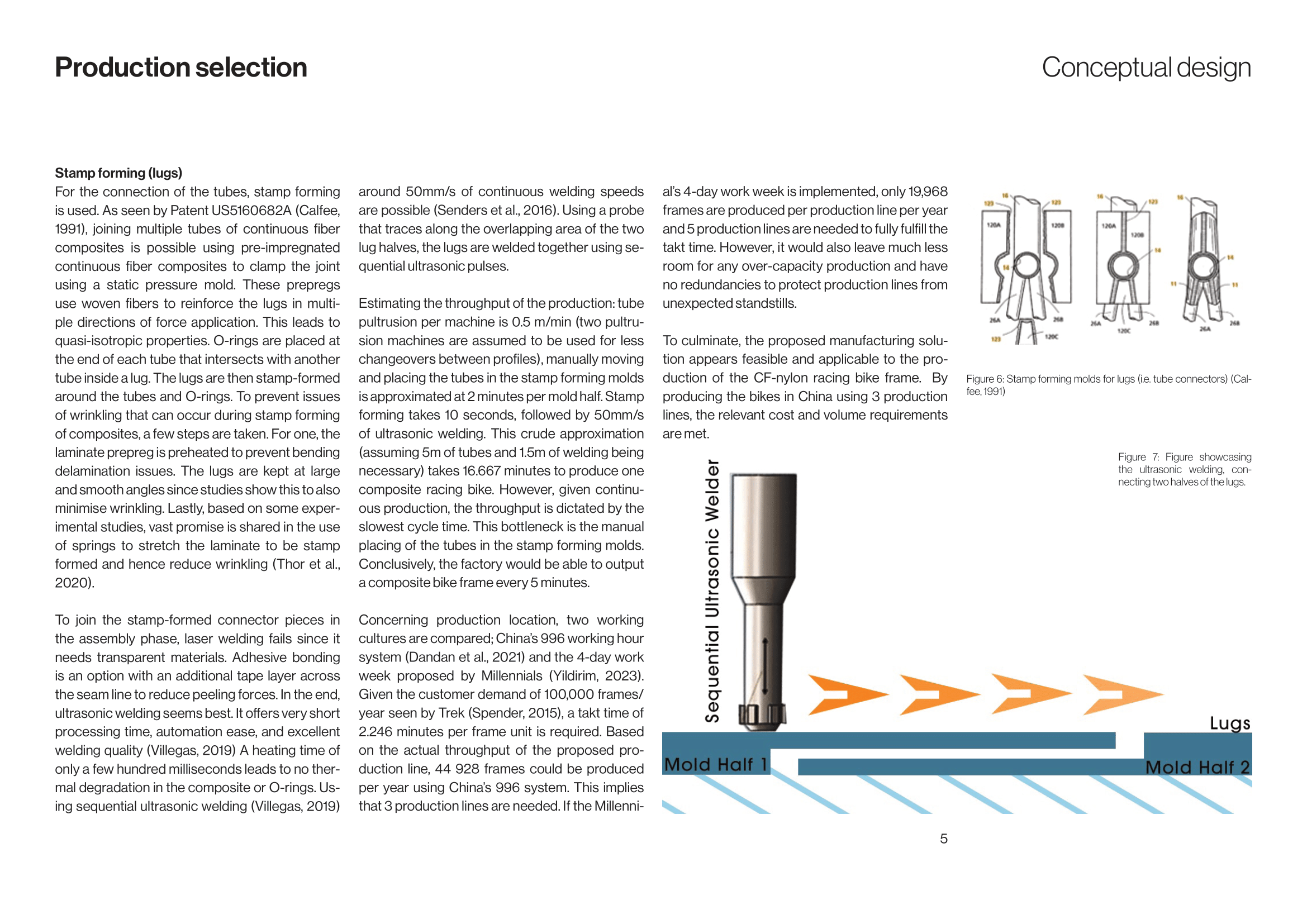
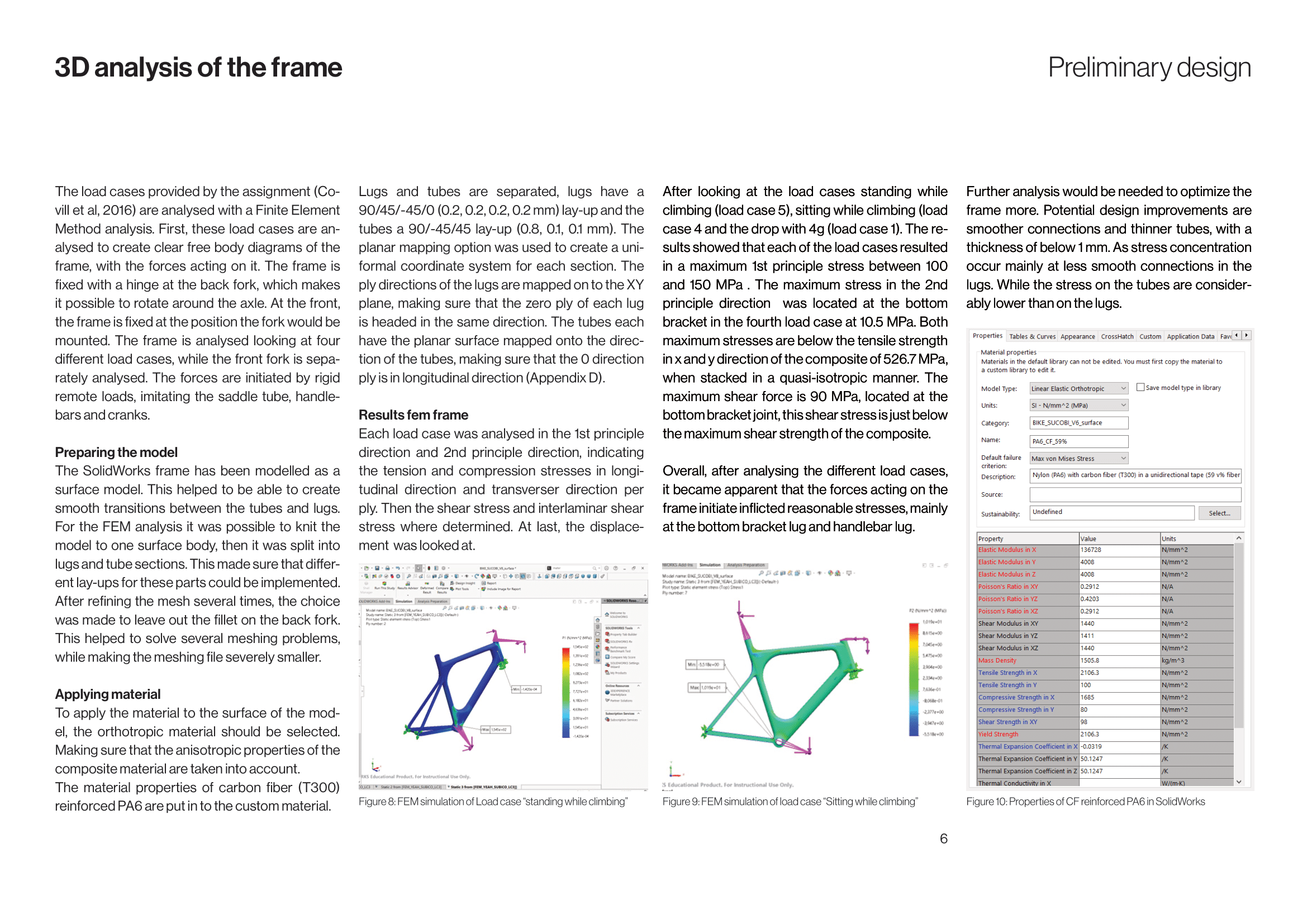
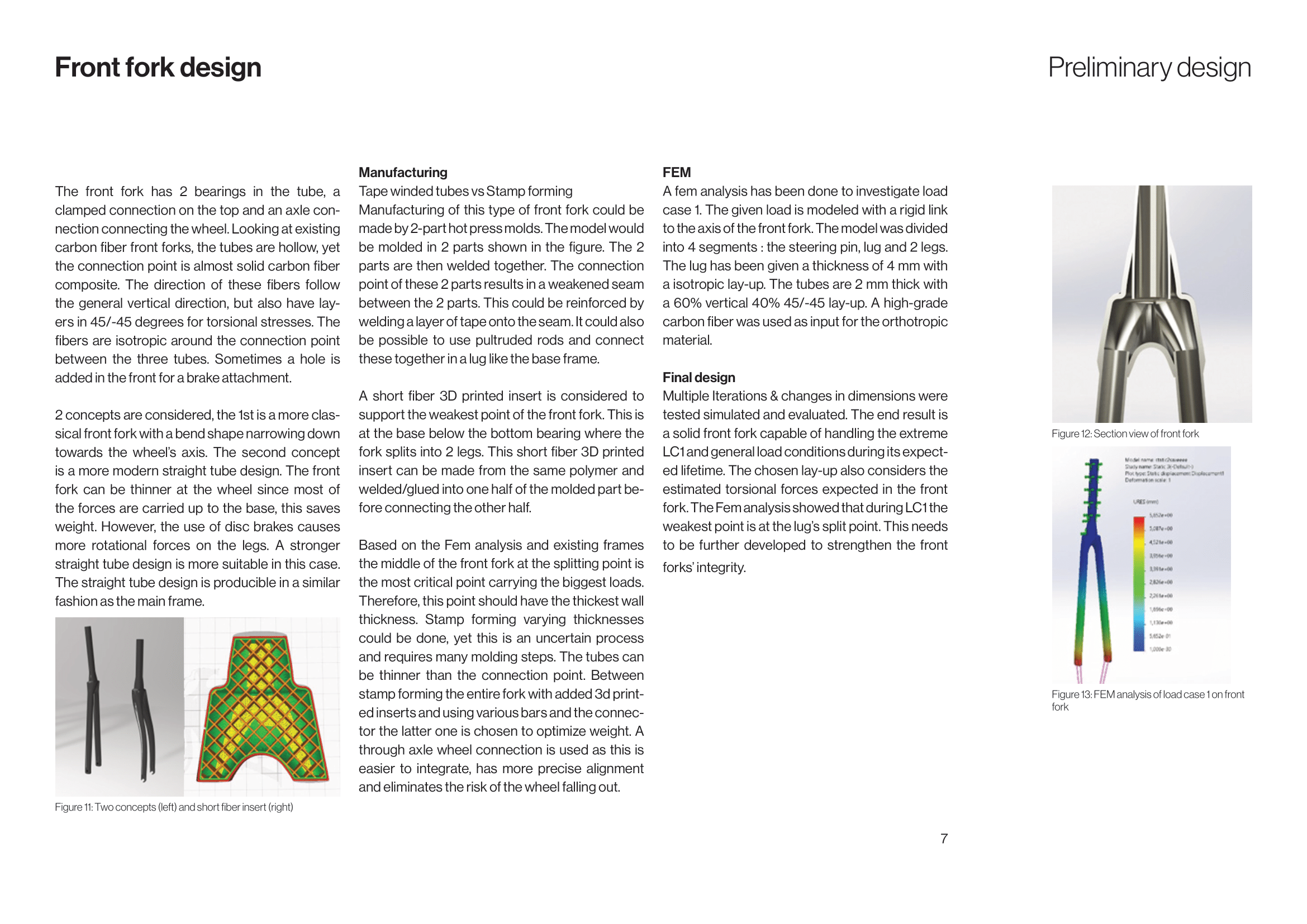
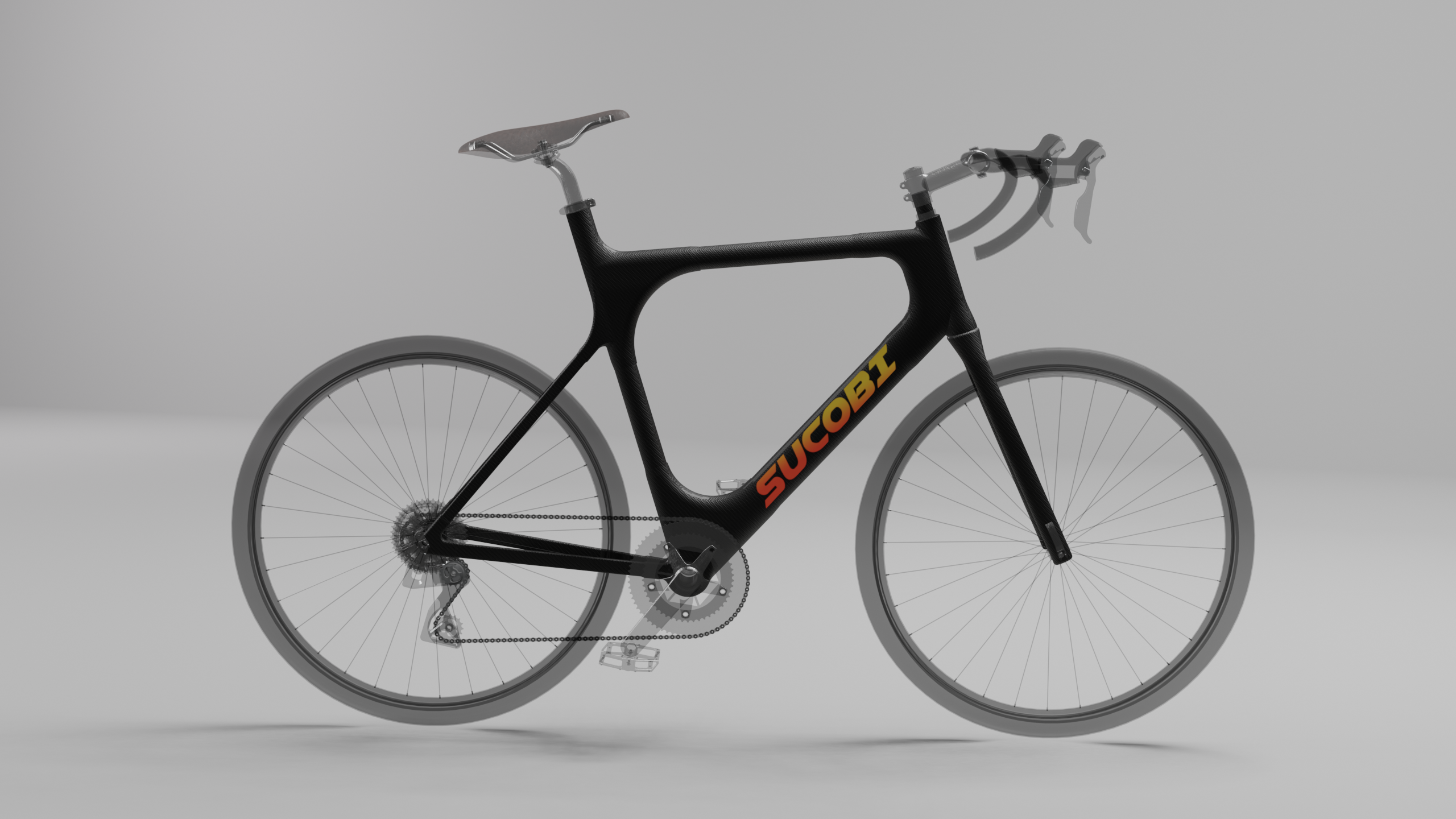
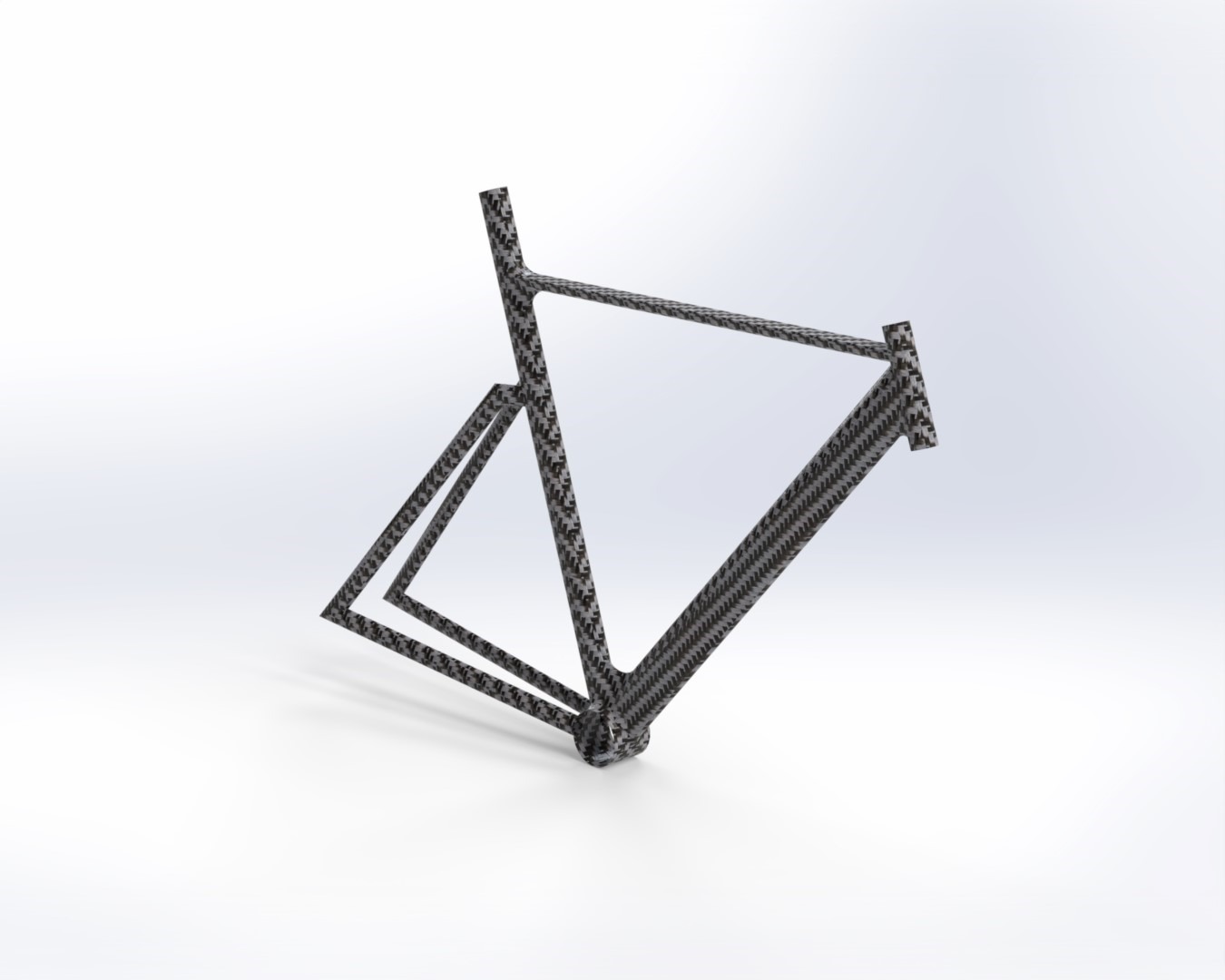
SUCOBI, the Sustainable Composite Bike, aimed to design a high-end racing bicycle frame using a recyclable thermoplastic composite, targeting automated production of 100,000 units annually. Starting with initial 2D and Finite Element Method (FEM) analyses to optimize frame geometry for strength and durability, the team selected a PA6/carbon fiber composite for its balance of strength, cost, and manufacturability. Manufacturing techniques included pultrusion for frame tubes to maintain consistent fiber alignment and mechanical properties, and stamp forming combined with ultrasonic welding for assembling lugs and joints. This approach enabled efficient production while maintaining a lightweight frame under 1.5 kg. The design incorporated innovative features like variable cross-sectional profiles to enhance aerodynamics and performance. The project concluded with the successful integration of advanced materials and manufacturing techniques, meeting all design and performance targets, and suggesting further empirical testing for optimization.
PROJECT DETAILS
Project Type
Product Development
Research
Educational
Date
September 2023 - January 2024
My Role
Fabricator
Designer
Team
Tim van Berloo, Kaj Streelder, Pepijn Goossens, Leon Peters
Awards
8.5/10 (highest grade of course)
Challenge
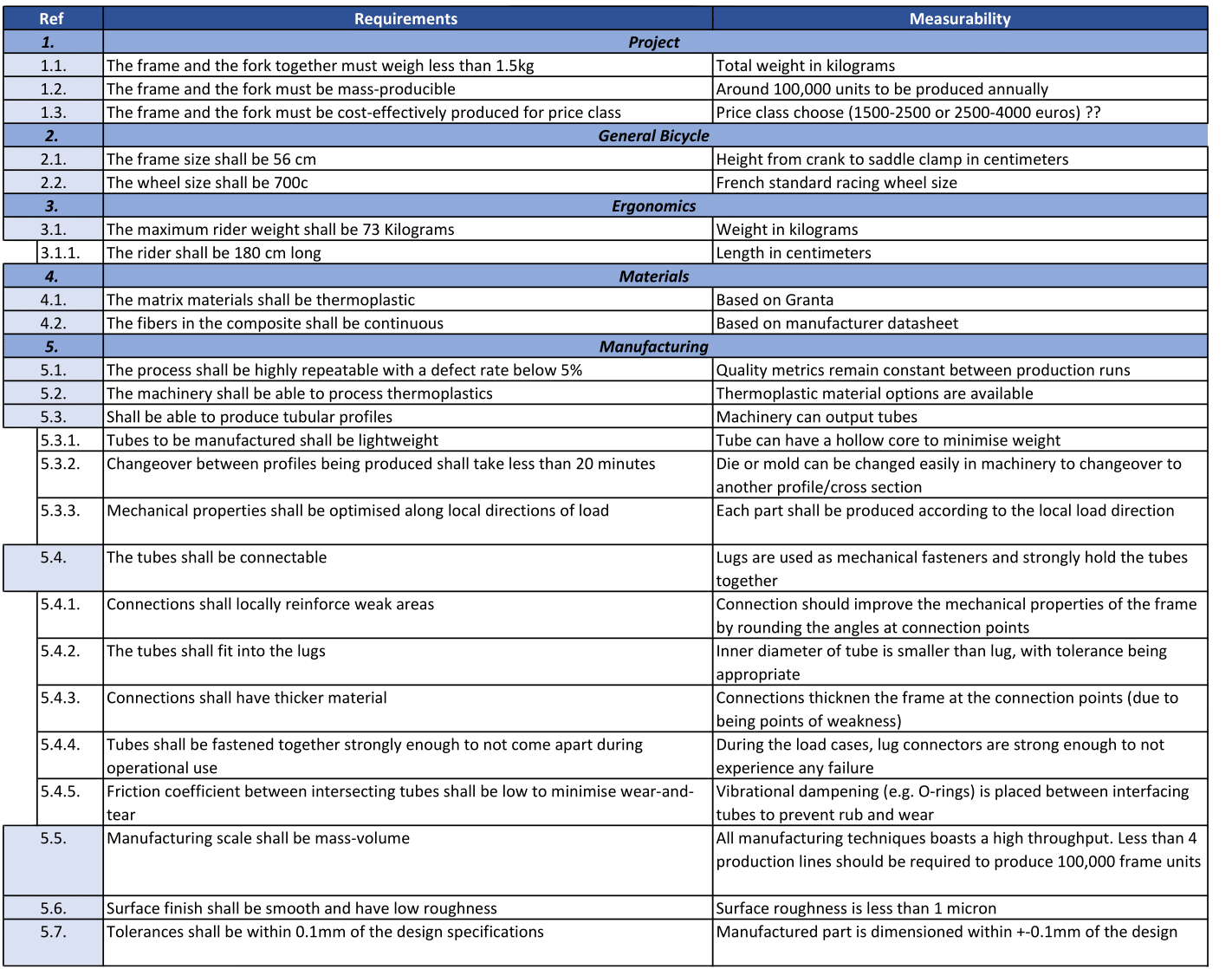
Based on the problem context, a list of requirements was constructed. These were defined based on the NVA principle (Necessary, Verifiable, Achievable).
Simplified List of Requirements for Composite Bike Frame




.jpeg)
.jpeg)
.jpeg)